If you want to discover Nice in a relaxed and enjoyable way, combine a stroll along the Promenade des Anglais with a visit to Place Masséna. It is the perfect combination of natural beauty, architecture and Mediterranean charm, without having to travel long distances between attractions…
The promenade deserves special attention. One of the city’s most iconic landmarks, it stretches for seven kilometres along the seafront, lined with palm trees, beaches and elegant buildings. It is ideal for walking, cycling, taking photographs or simply enjoying the sea views.
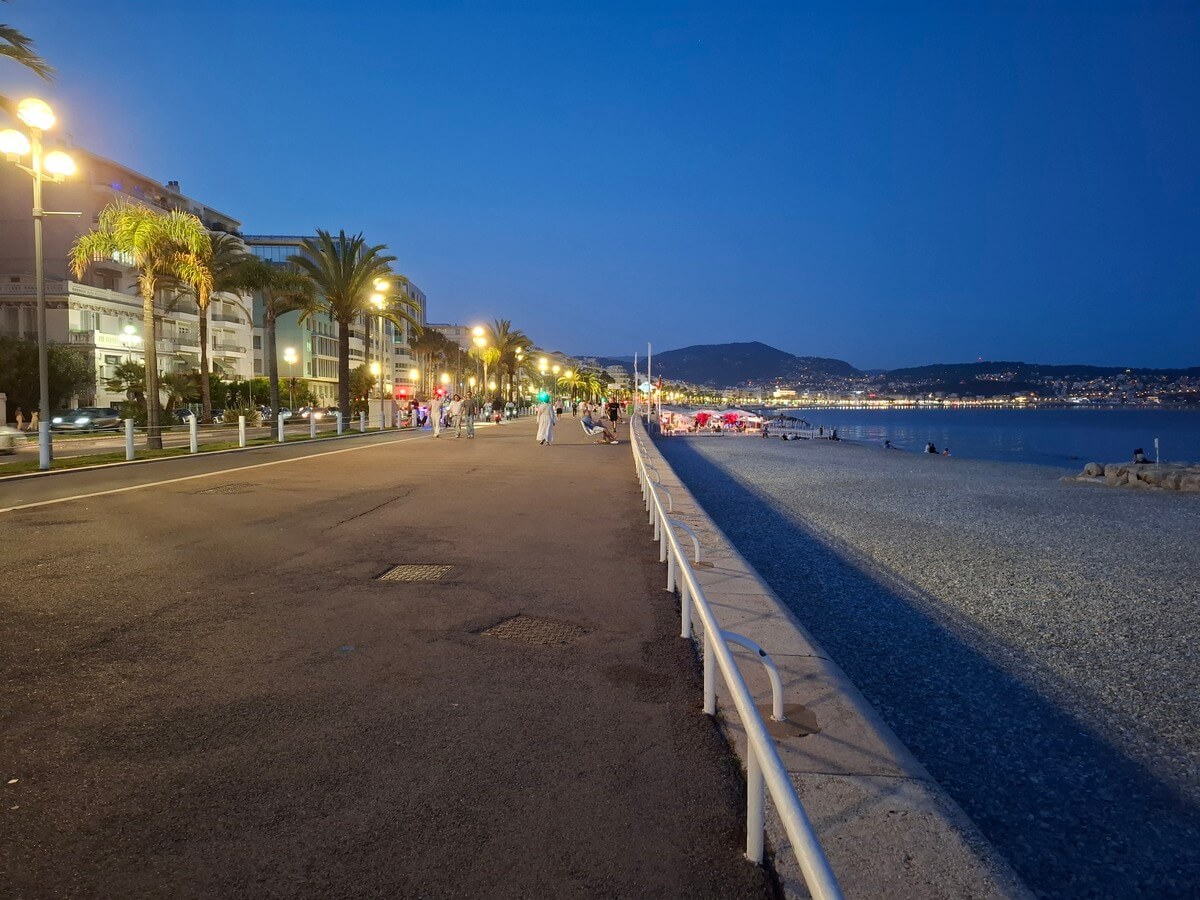
On one side, you will find parks and elegant buildings, while on the other, beaches, restaurants and seaside clubs. It is a place made for relaxation and enjoying the true Mediterranean lifestyle.
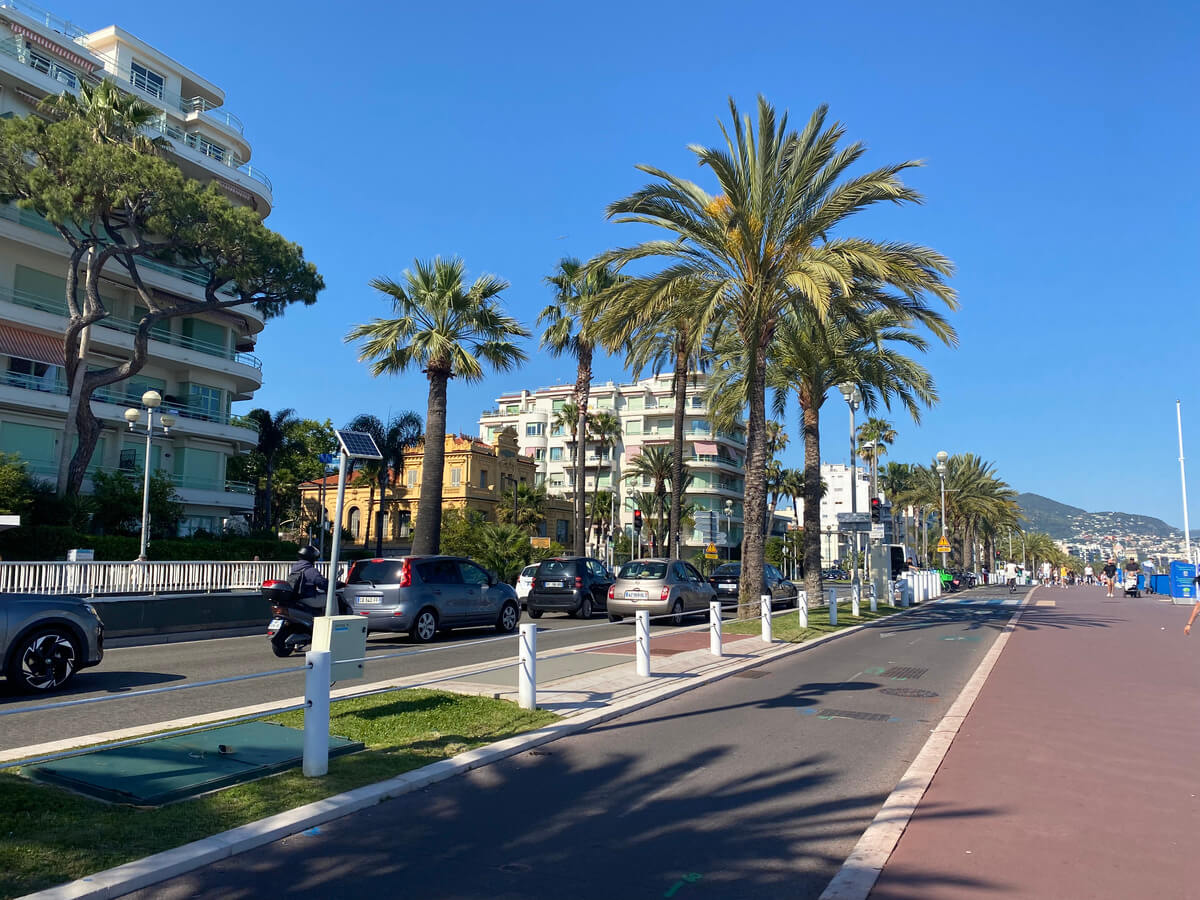
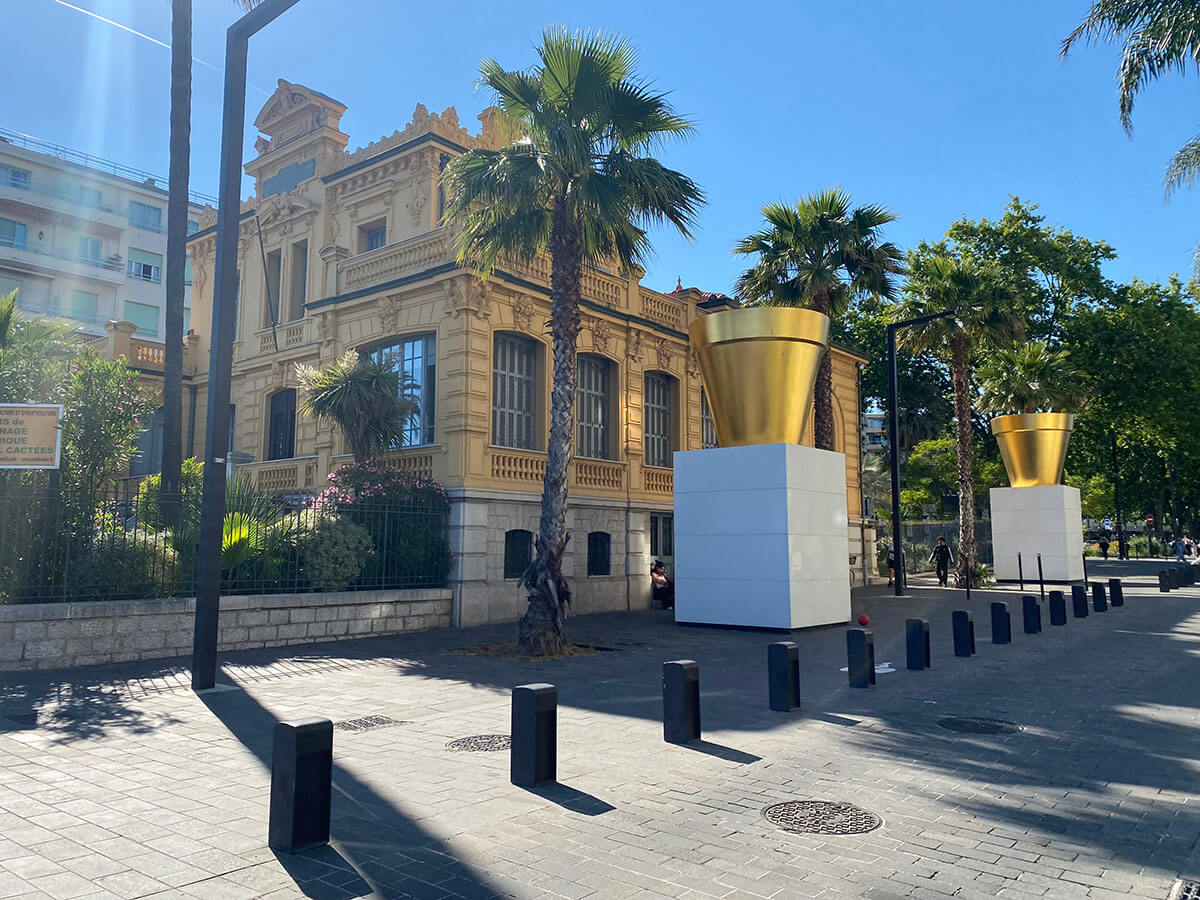
Today, it is hard to imagine Nice without its famous promenade, palm trees and sea views, but the city’s waterfront once looked very different.
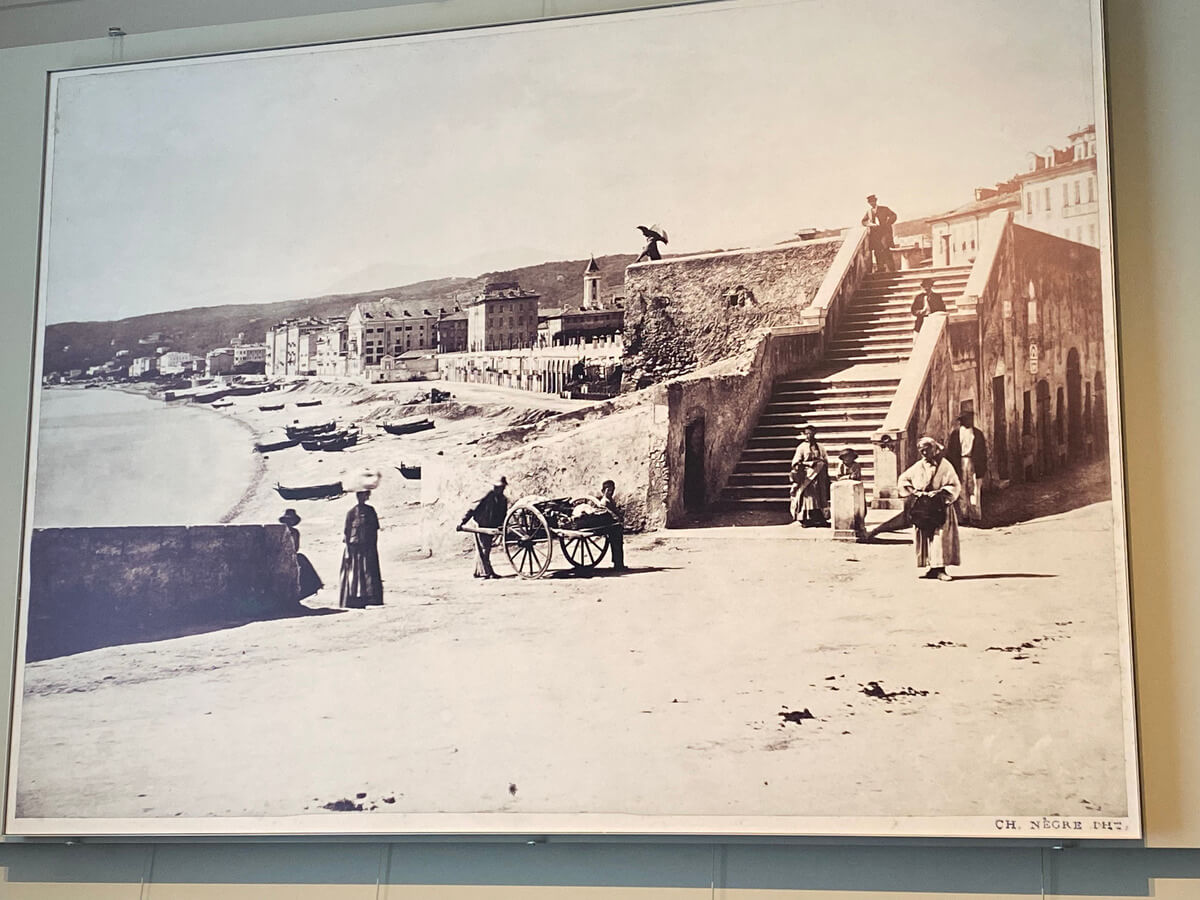
At the beginning of the 19th century, Nice was a favourite winter destination for wealthy British visitors, including Queen Victoria, who visited the city several times. They particularly enjoyed the western part of Nice, but one thing was missing: a proper seafront promenade.
The idea of building one emerged in 1822, during a particularly harsh winter when frost and failed crops left many local residents without work. A British clergyman named Lewis Way came up with a simple yet thoughtful idea. He collected money from wealthy British residents to employ poor local people in the construction of a seafront walkway.
This way, two problems were solved at once. The path was completed in 1824 and was initially called Strada del Littorale. Local residents soon nicknamed it Camin dei Inglés, meaning “The English Way”.
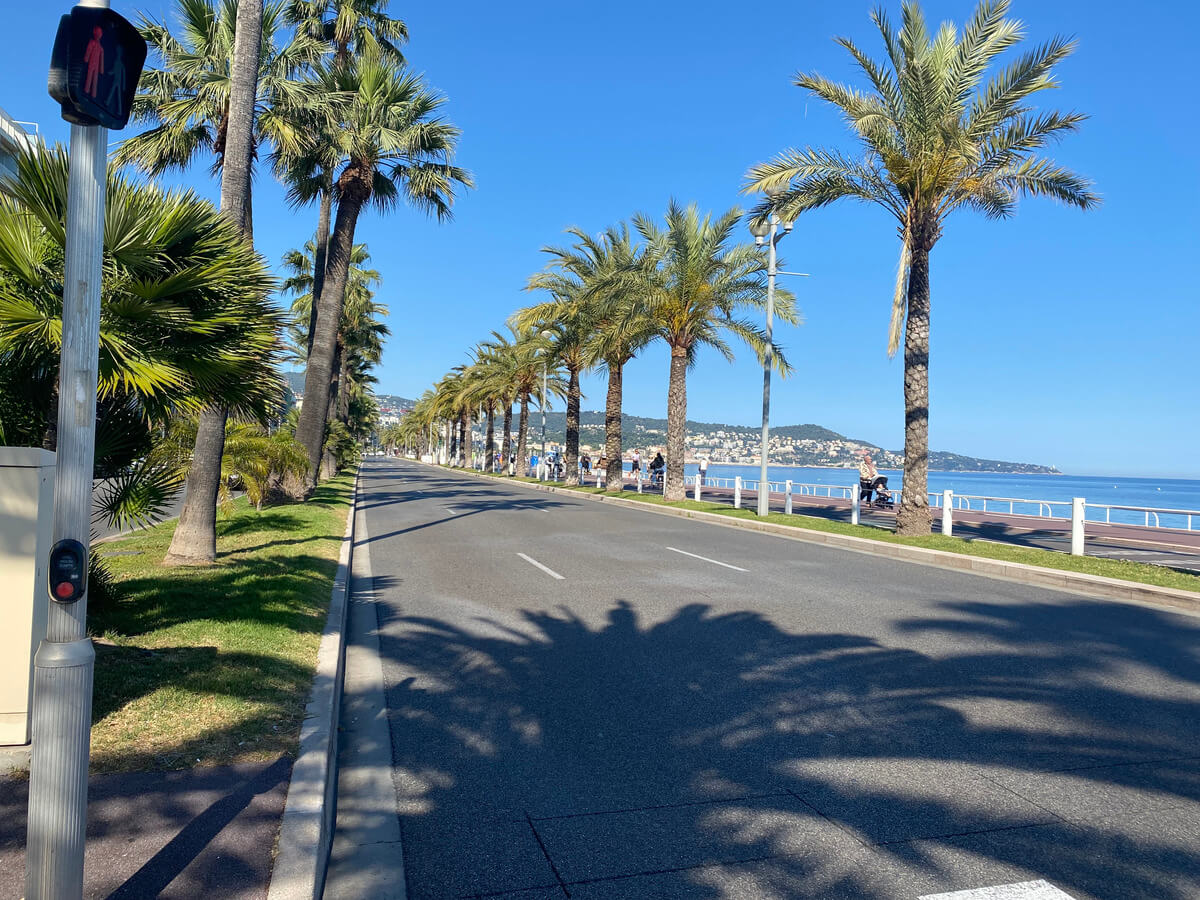
What began as a modest path just two metres wide soon became a favourite promenade of European aristocrats, artists and wealthy travellers.
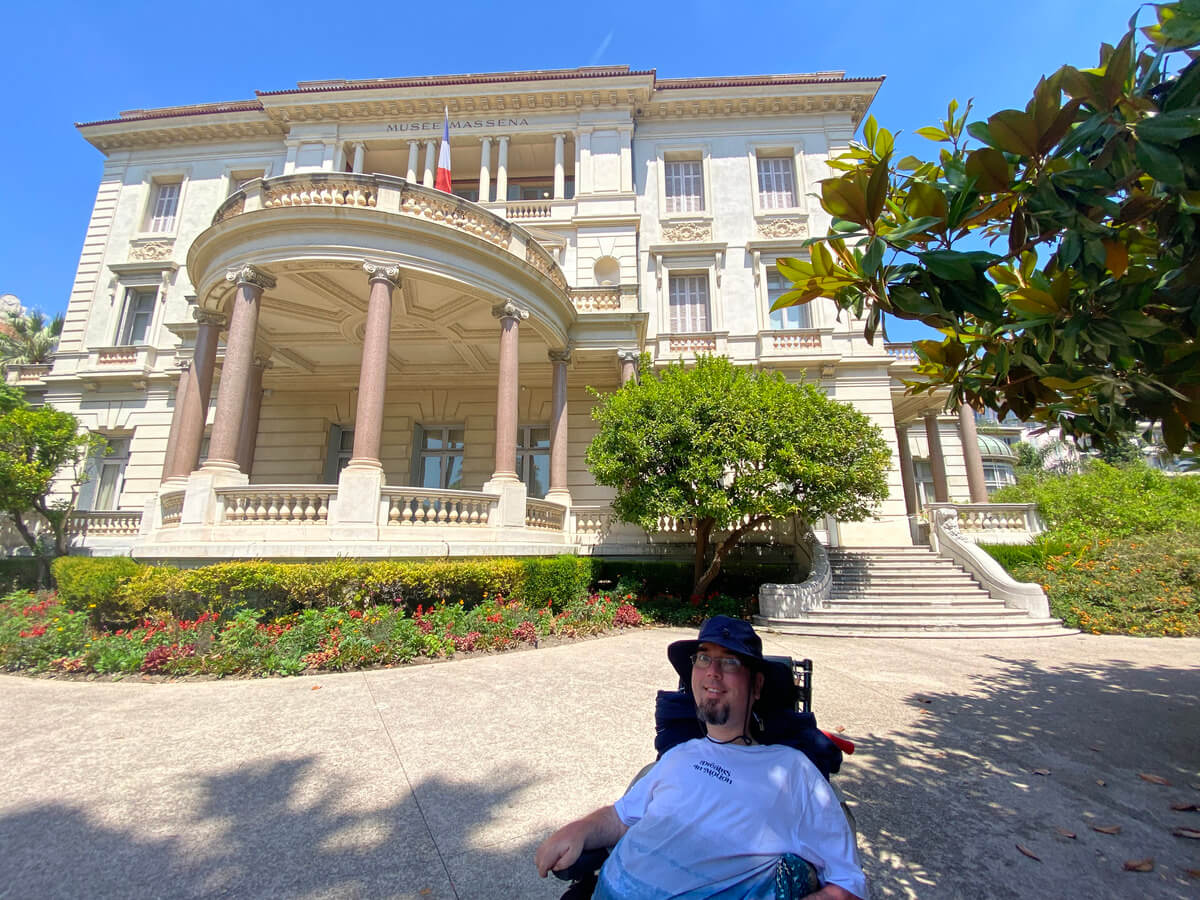
During the 19th century, magnificent villas and impressive buildings began to appear along the promenade, including Villa Masséna, which I have written more about here, as well as luxurious hotels.
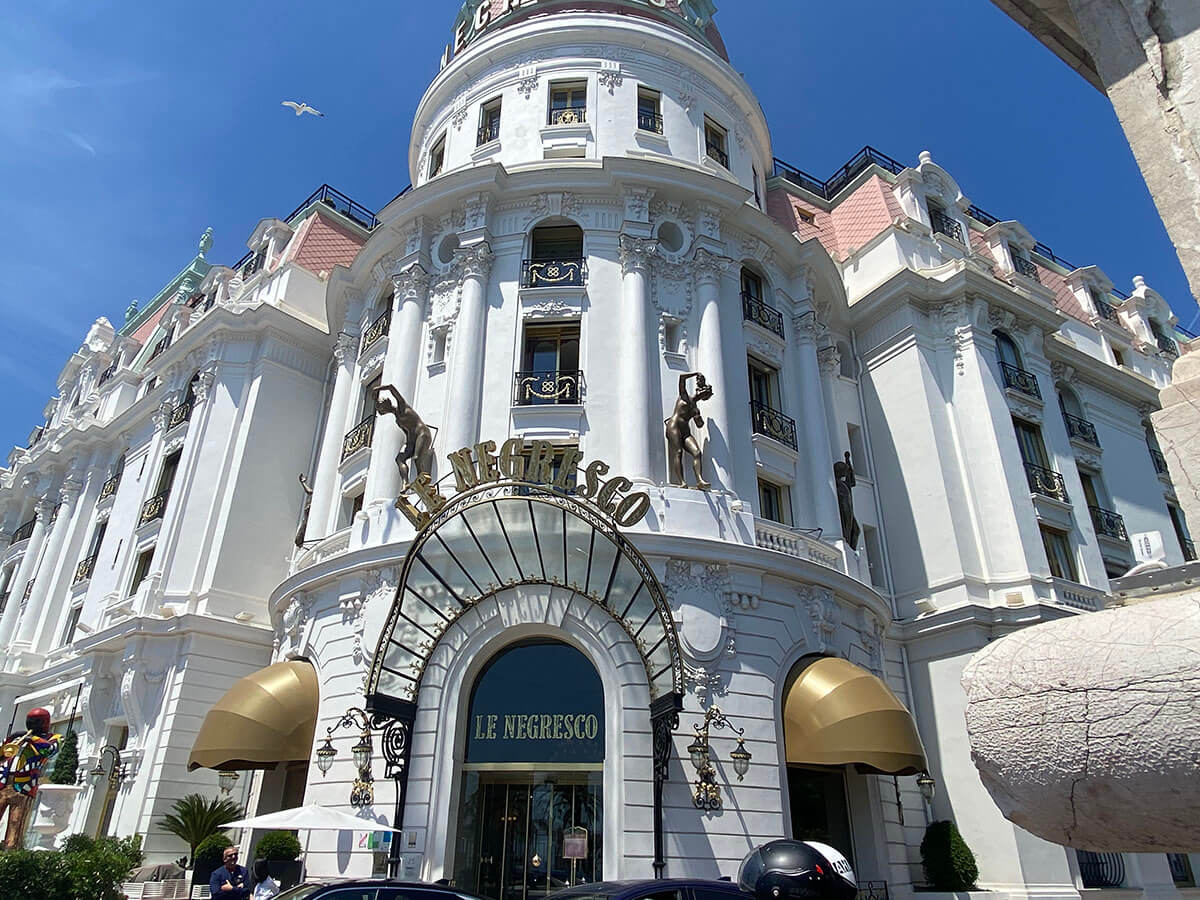
One building that stands out in particular is the famous Le Negresco Hotel, which opened in 1913 and has welcomed numerous celebrities, including artists, politicians and members of royal families. I have written more about the Negresco Hotel here.
Over time, tourism itself changed. What was once a winter retreat for Europe’s elite gradually became a popular destination for visitors from all over the world.
Today, the promenade is a meeting place for young and old, locals and tourists alike. It is a cycling path, an open-air art gallery or simply somewhere to sit back, relax and watch the sunset.
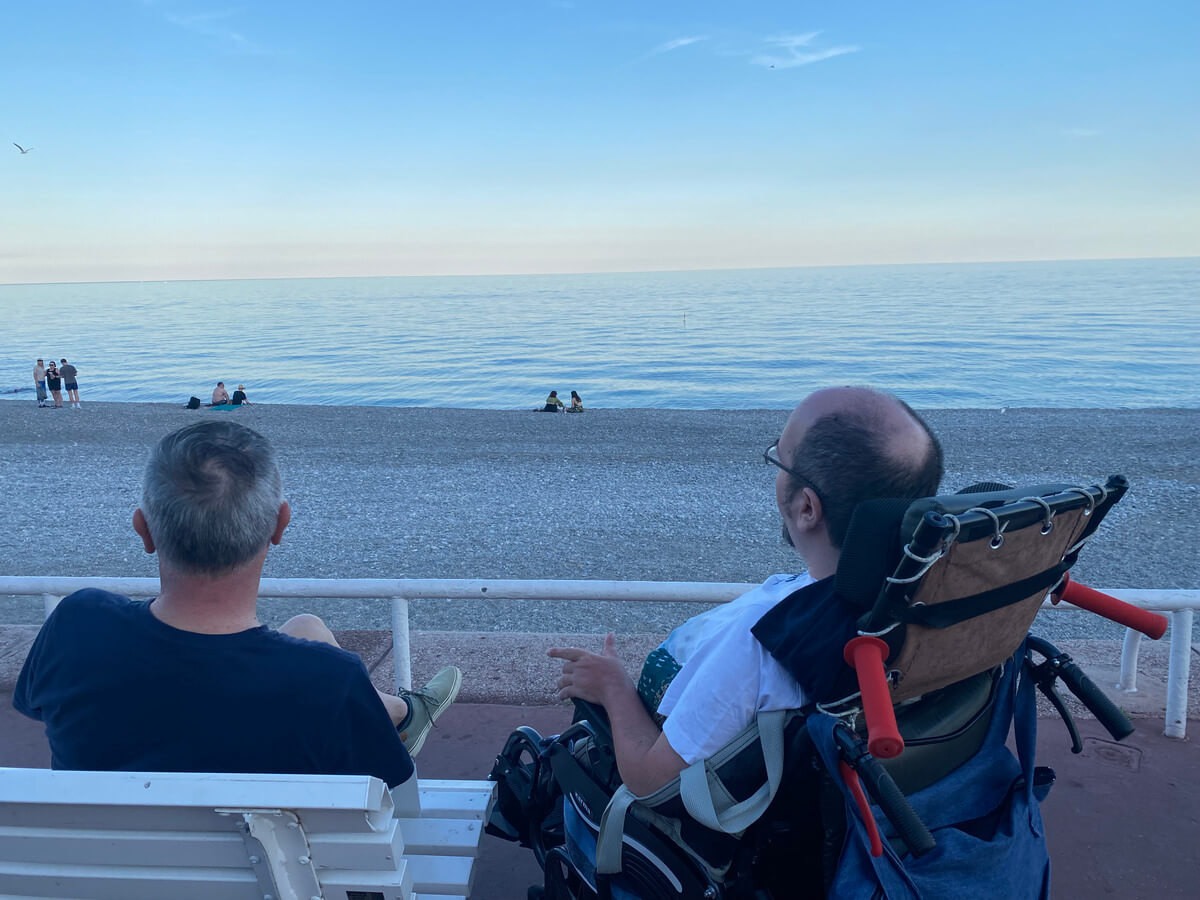
Today, the Promenade des Anglais is one of the most recognisable symbols of the French Riviera. I have walked along it several times, and it is the only place where I wished I had an electric mobility scooter. I think that says enough!
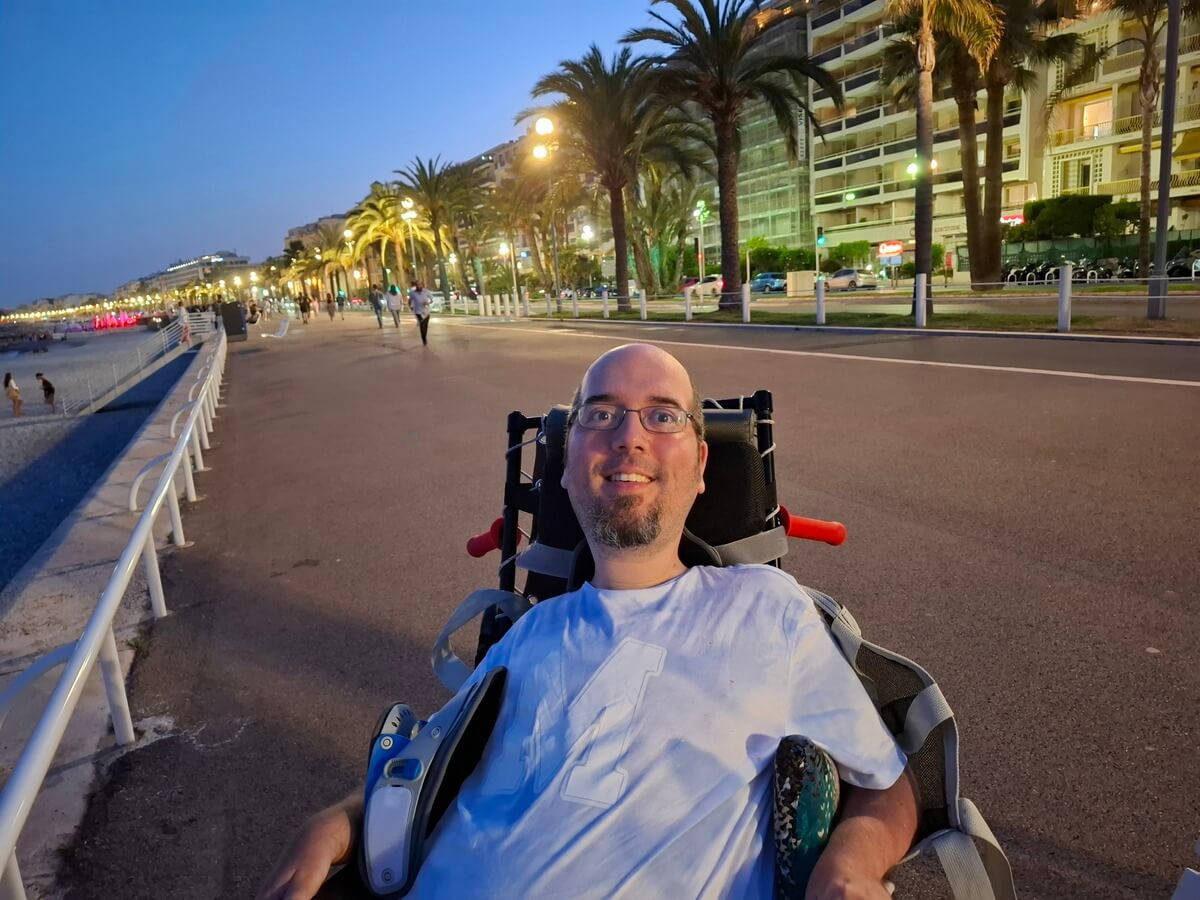
One of the main reasons to visit Nice is undoubtedly swimming and sunbathing on the beaches along the promenade. The turquoise, crystal-clear water is hard to resist, but there is one downside: the beaches are covered in pebbles, making them rather uncomfortable for lying down.
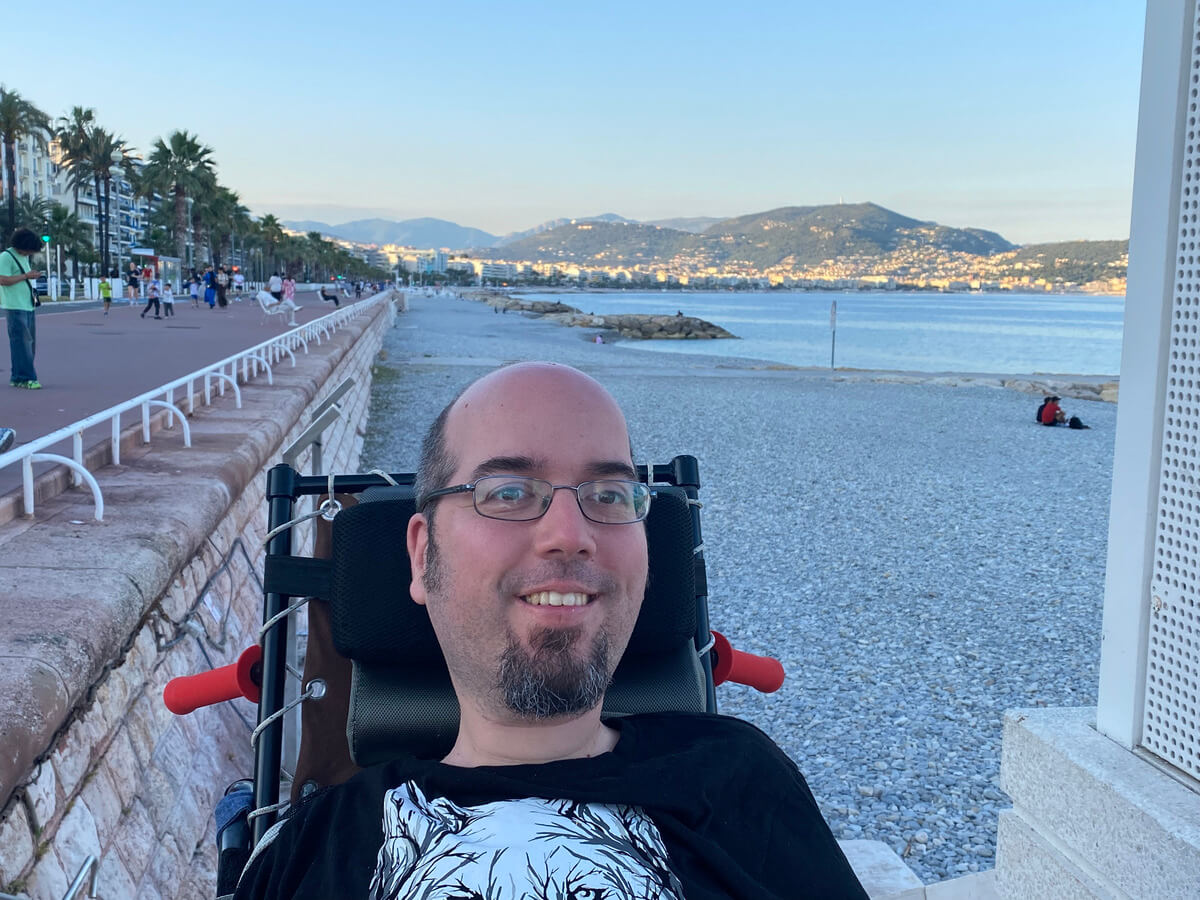
One solution is to use the private beach areas with sun loungers, although the prices are typical of the French Riviera. If that is not your cup of tea, there are also free public beaches available. Some offer showers, lifeguards and even wheelchair-accessible facilities.
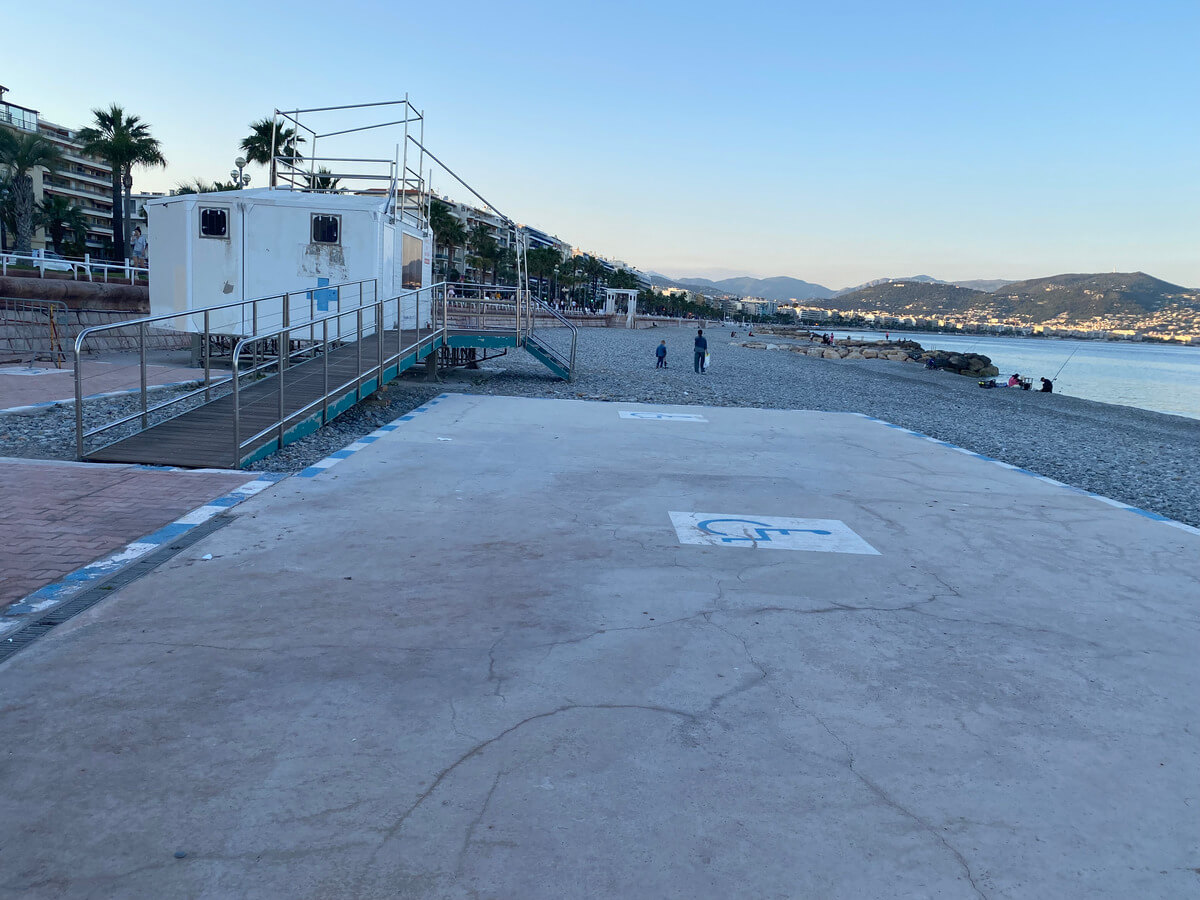
Nice has more than 20 public beaches, but keep in mind that changing beaches will not change either the pebbles or the colour of the sea. So find a spot that suits you and enjoy!
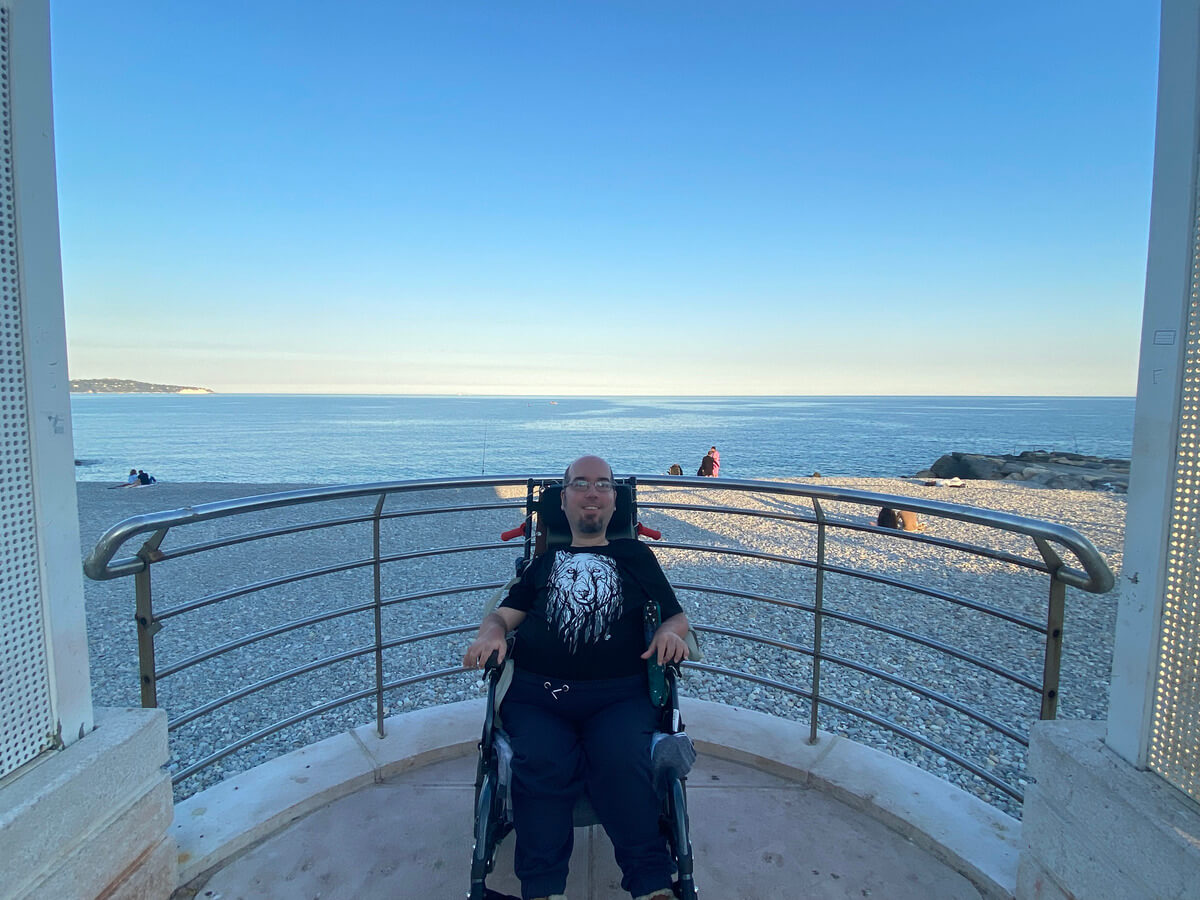
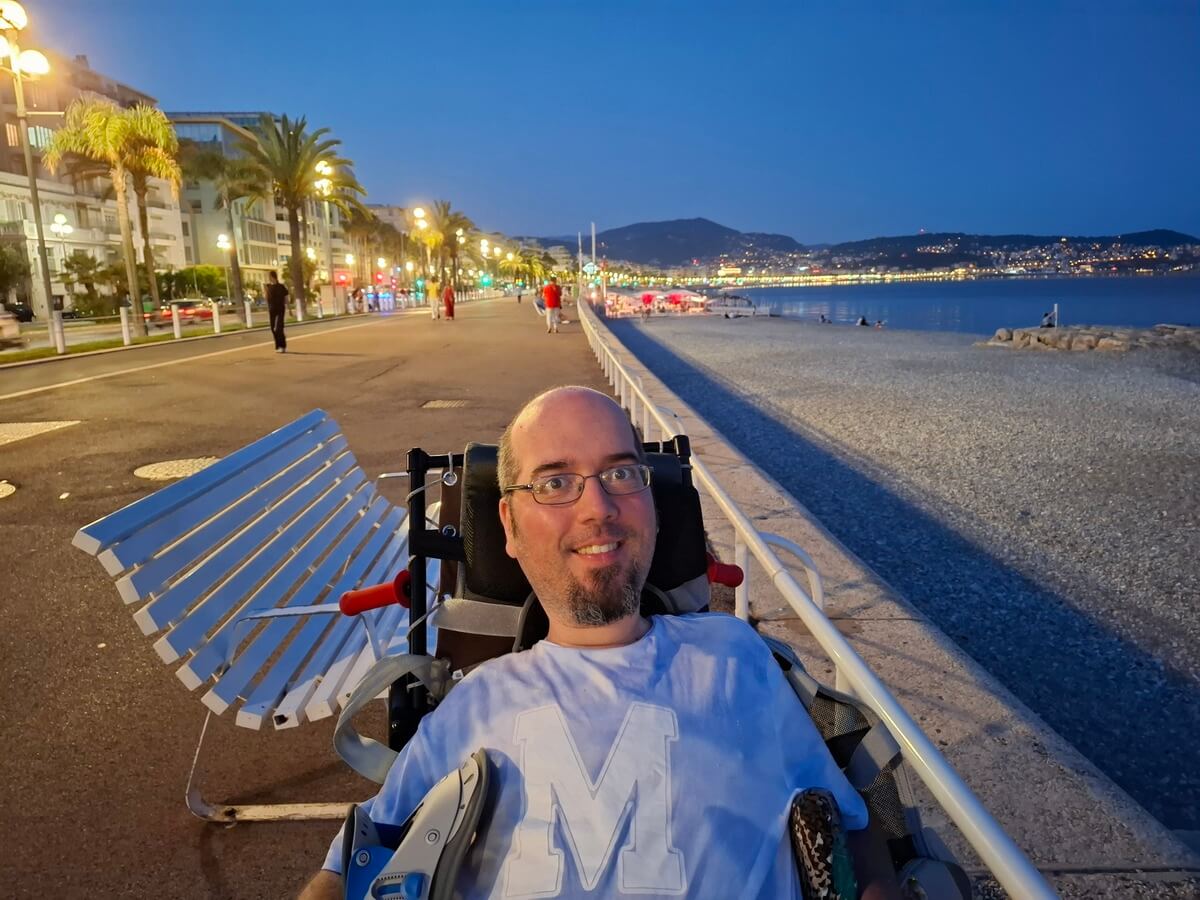
At night, the promenade comes alive in a different way. The lights come on, and the sea is no longer the main attraction. Instead of swimmers, you will find people sitting on the beach with a slice of pizza, enjoying the sunset.
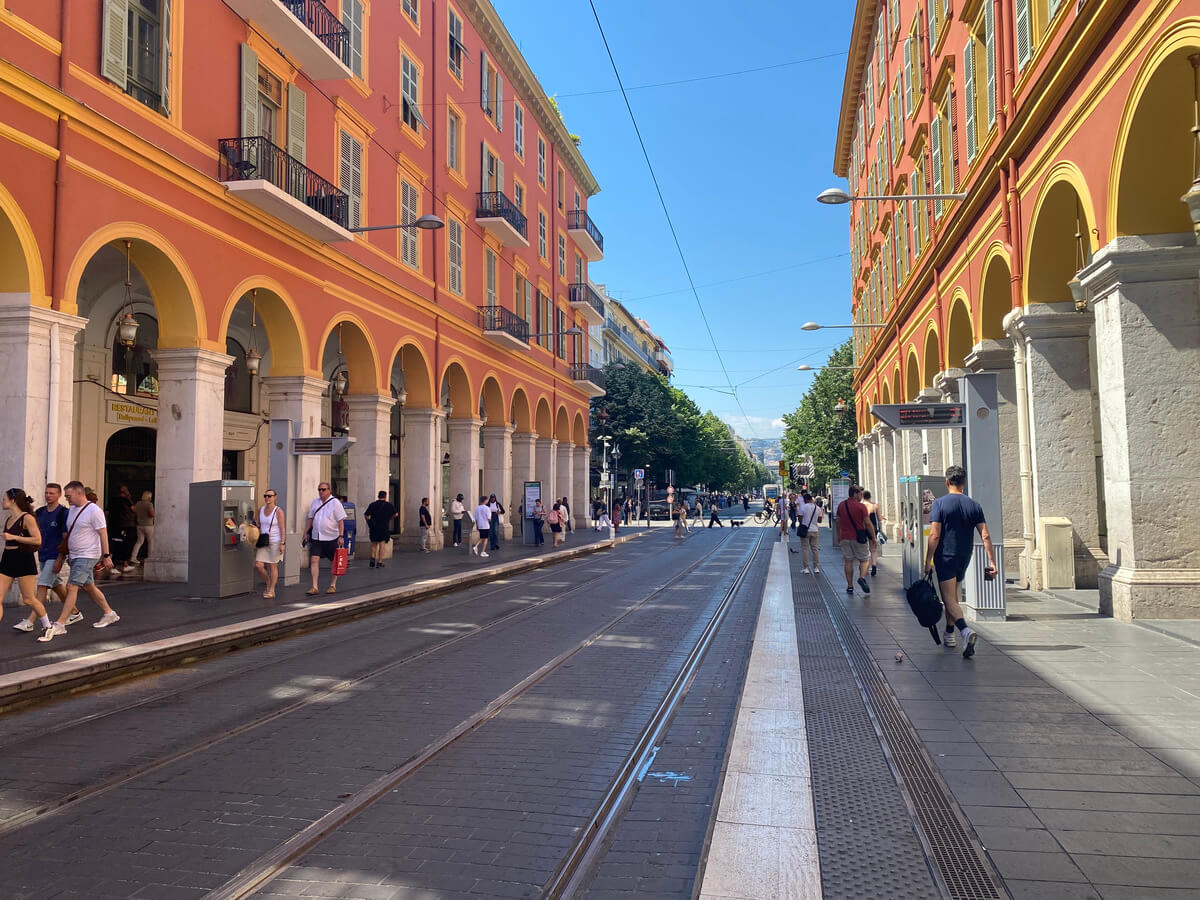
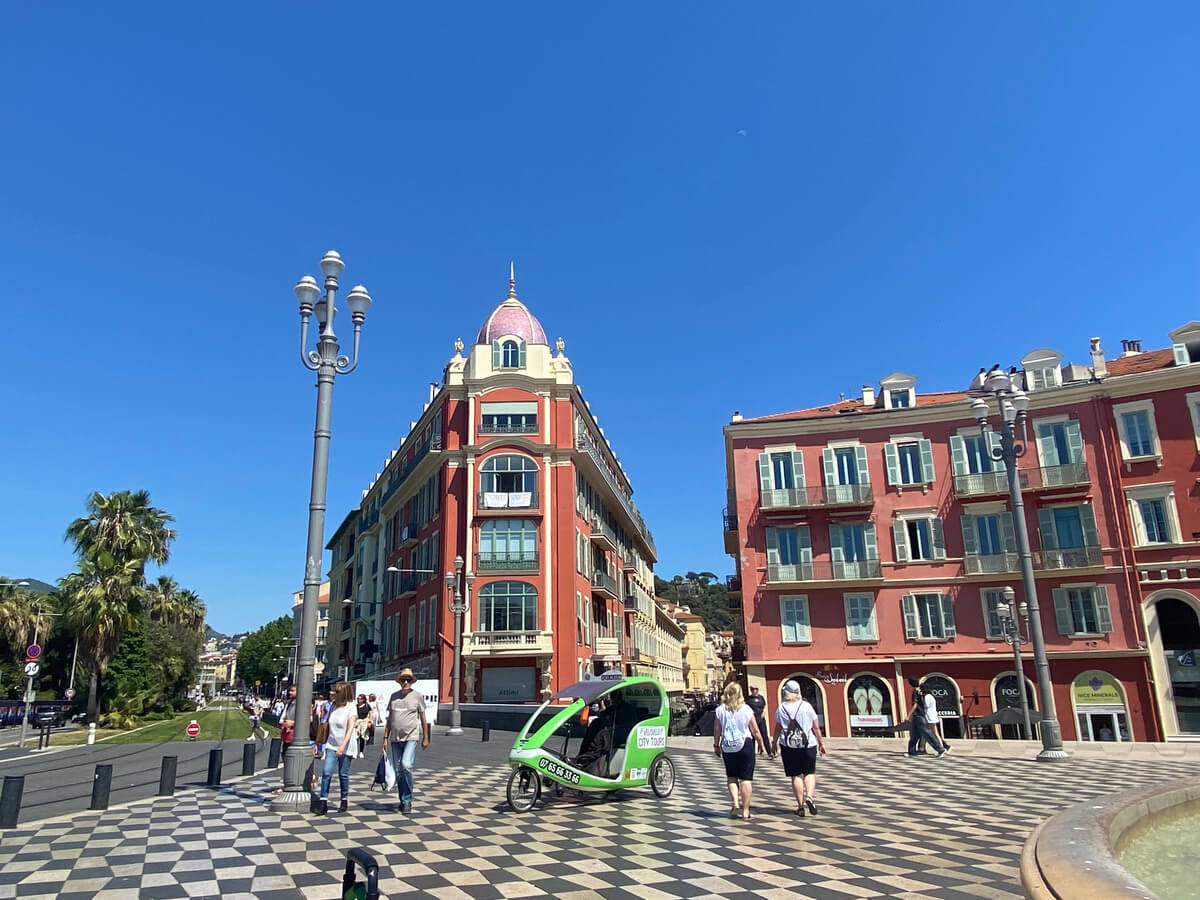
After our walk along the seafront, we arrive at the heart of the city: Place Masséna. It is instantly recognisable by its red and ochre façades, black-and-white paving and monumental Fountain of the Sun.
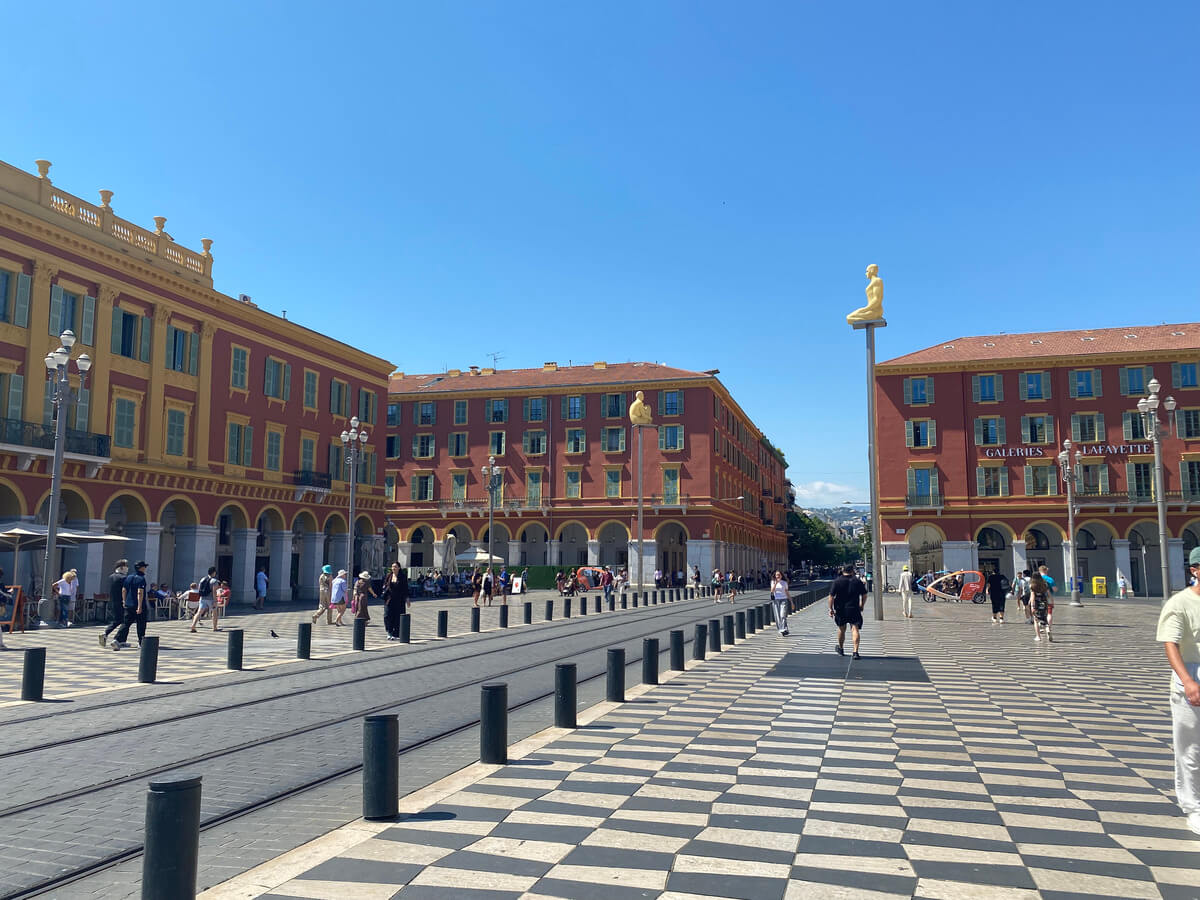
The square is named after André Masséna, a French military commander born in Nice, but its central monument is dominated by Apollo, the Greek god of the Sun. Standing approximately seven metres tall, the statue is surrounded by five bronze figures representing the Earth and the planets.
Interestingly, Apollo caused quite a scandal in 1956 because of his rather prominent nudity. The statue was removed from the square in the 1970s and did not return to its original location until 2011. Today, the Fountain of the Sun is one of the most recognisable symbols of Nice.
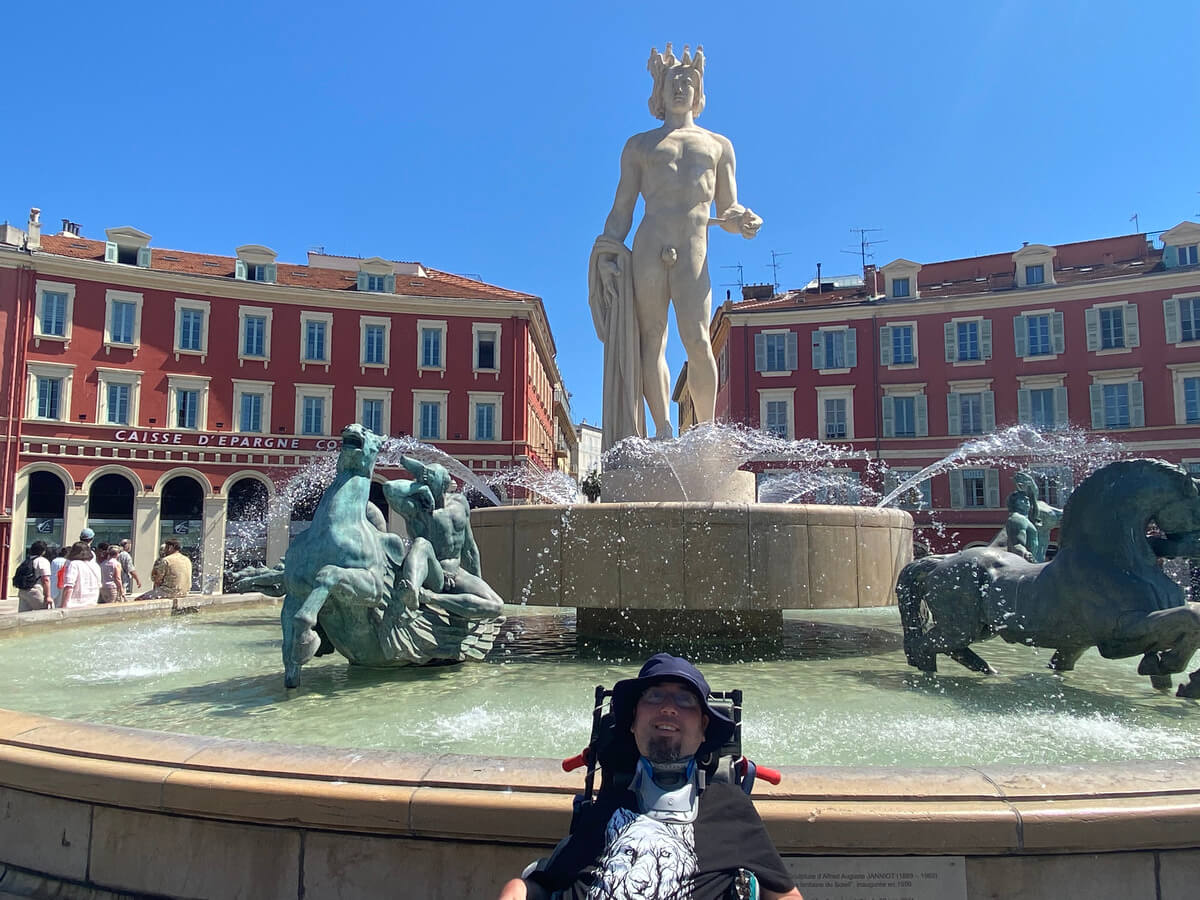
Place Masséna is also an ideal spot to take a break, do some shopping and explore the city. Its spacious pedestrian areas are generally wheelchair-accessible, although extra care is needed around tram tracks and crossings.
The square is also home to one of the city’s most interesting examples of contemporary art. Seven human figures, sitting or crouching, are placed on columns approximately 12 metres high. They resemble people deep in thought or meditation.
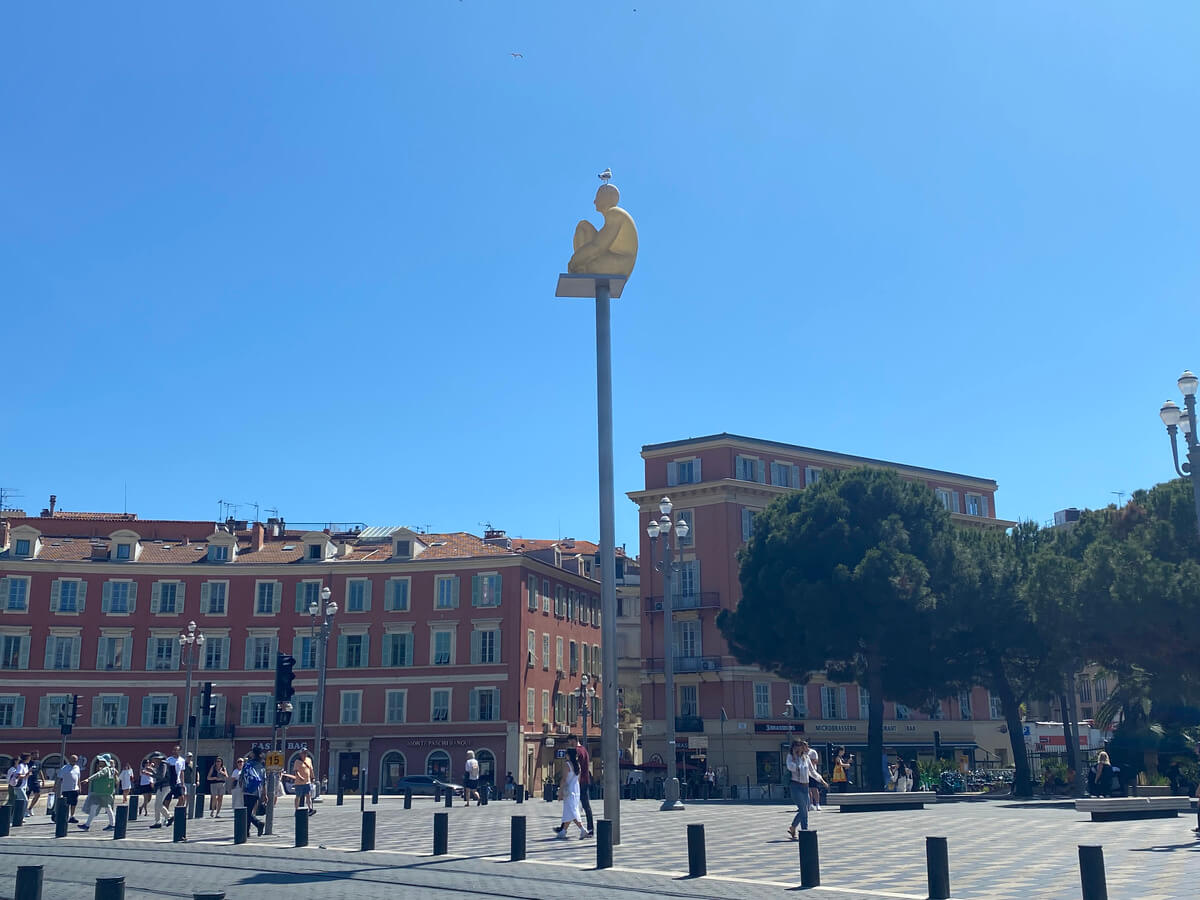
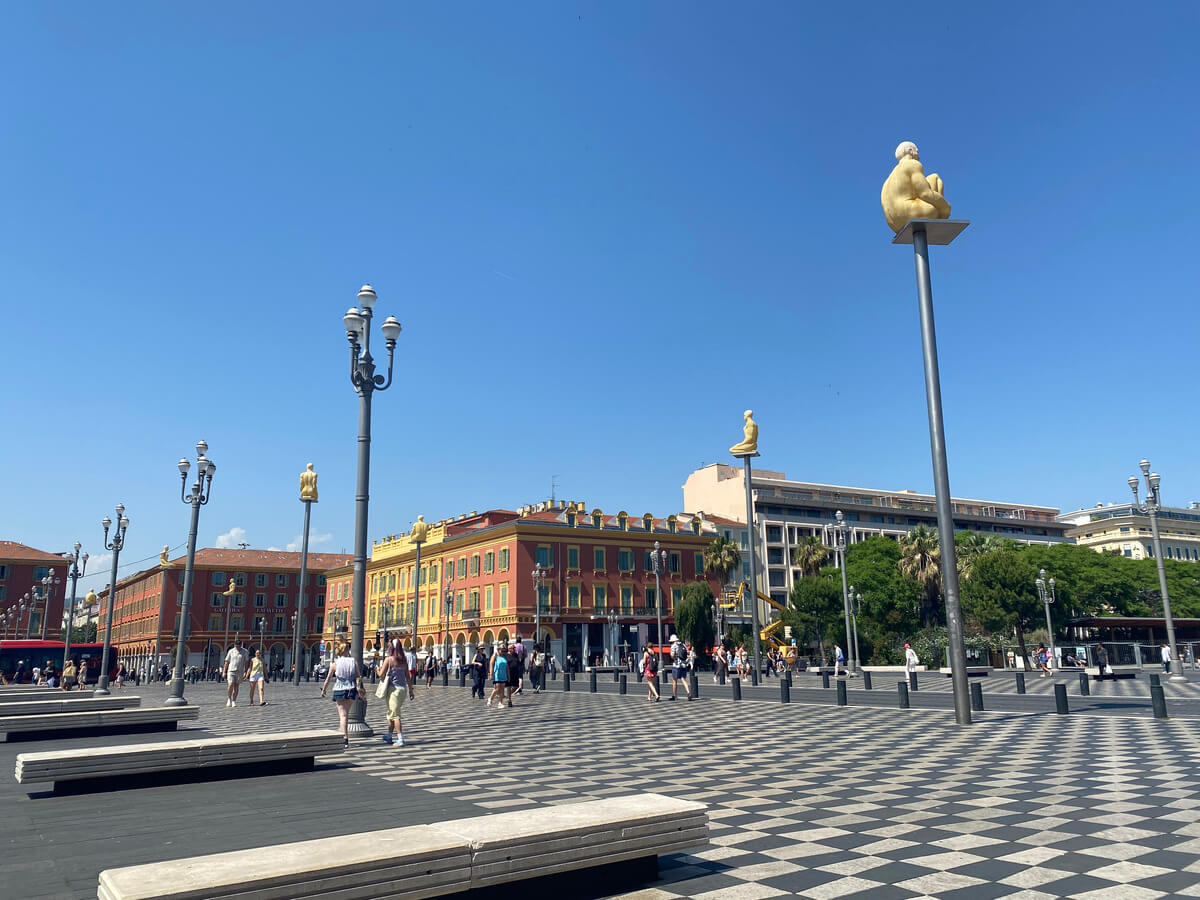
Each figure represents one of the seven continents. The installation was created in 2007 by Catalan artist Jaume Plensa and is called “Conversation in Nice”. The seven figures symbolically communicate with one another, as well as with the people passing through the square.
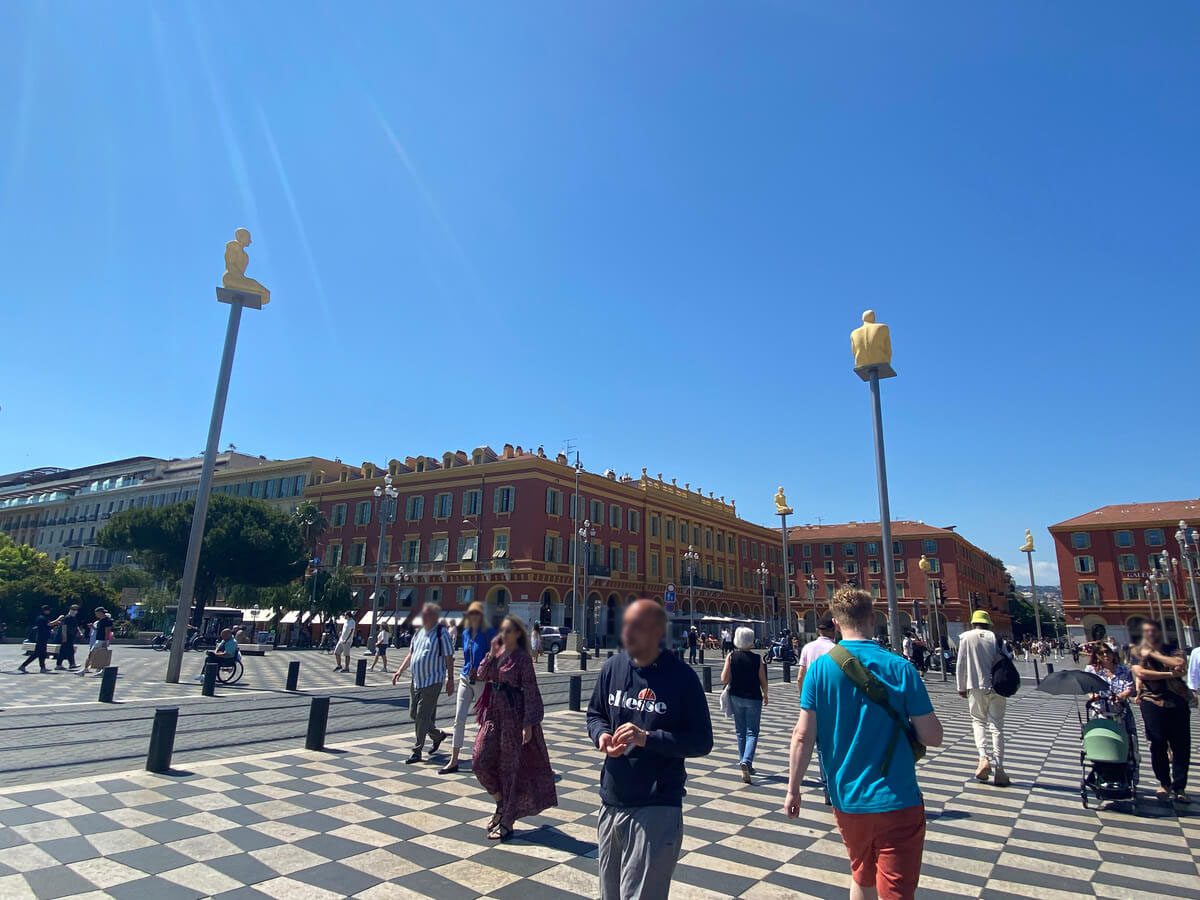
This is a place where ancient art and contemporary philosophy meet.
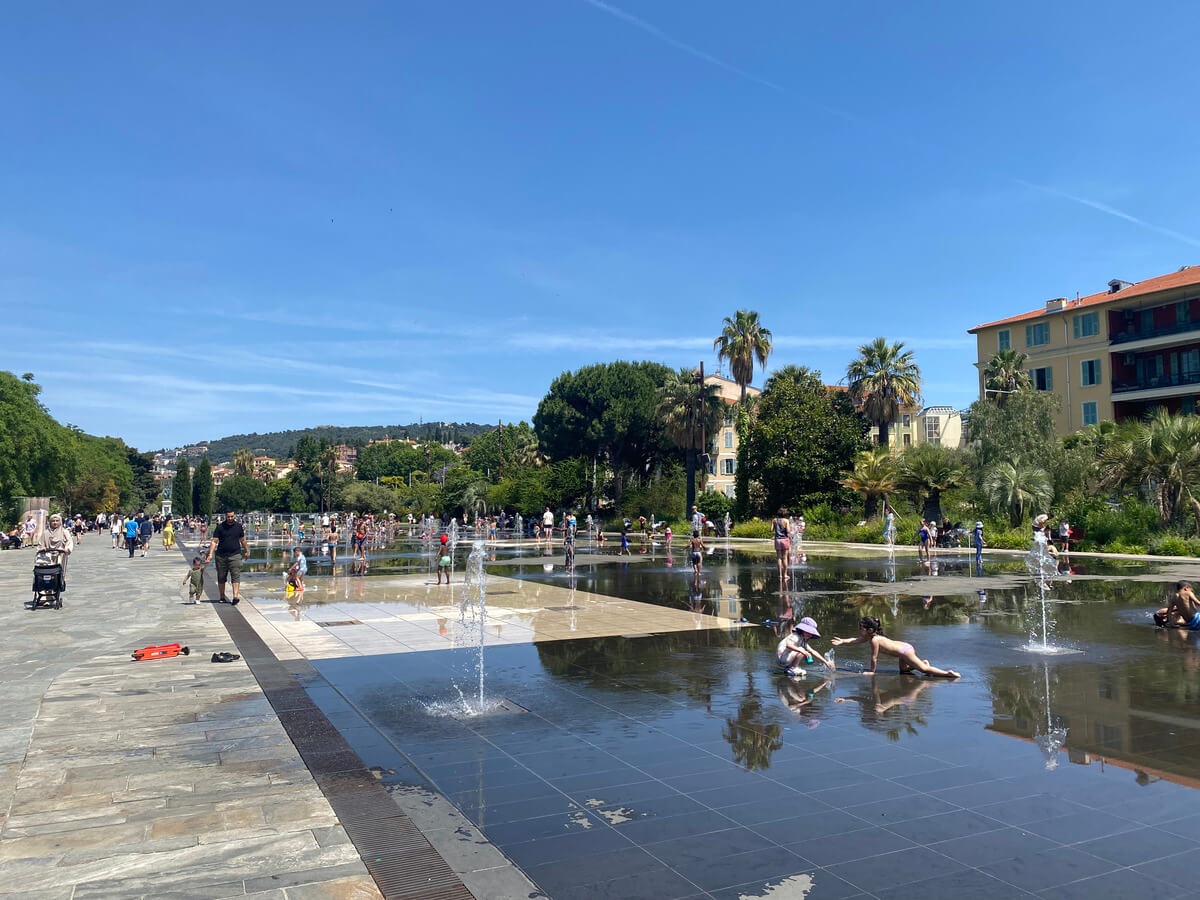
And there is more. Right next to Place Masséna, you will find a completely different kind of fountain: Miroir d’eau, or the Water Mirror. Instead of monumental sculptures and traditional fountains, water shoots directly out of the ground through 128 nozzles. The jets operate at different intervals and heights.
Children run around, laugh and try to dodge the unexpected bursts of water, while parents enjoy the spectacle. This unusual water attraction symbolically recalls the River Paillon, which once flowed through this part of the city.
Today, it is one of the liveliest spots in Nice, especially on warm summer days.
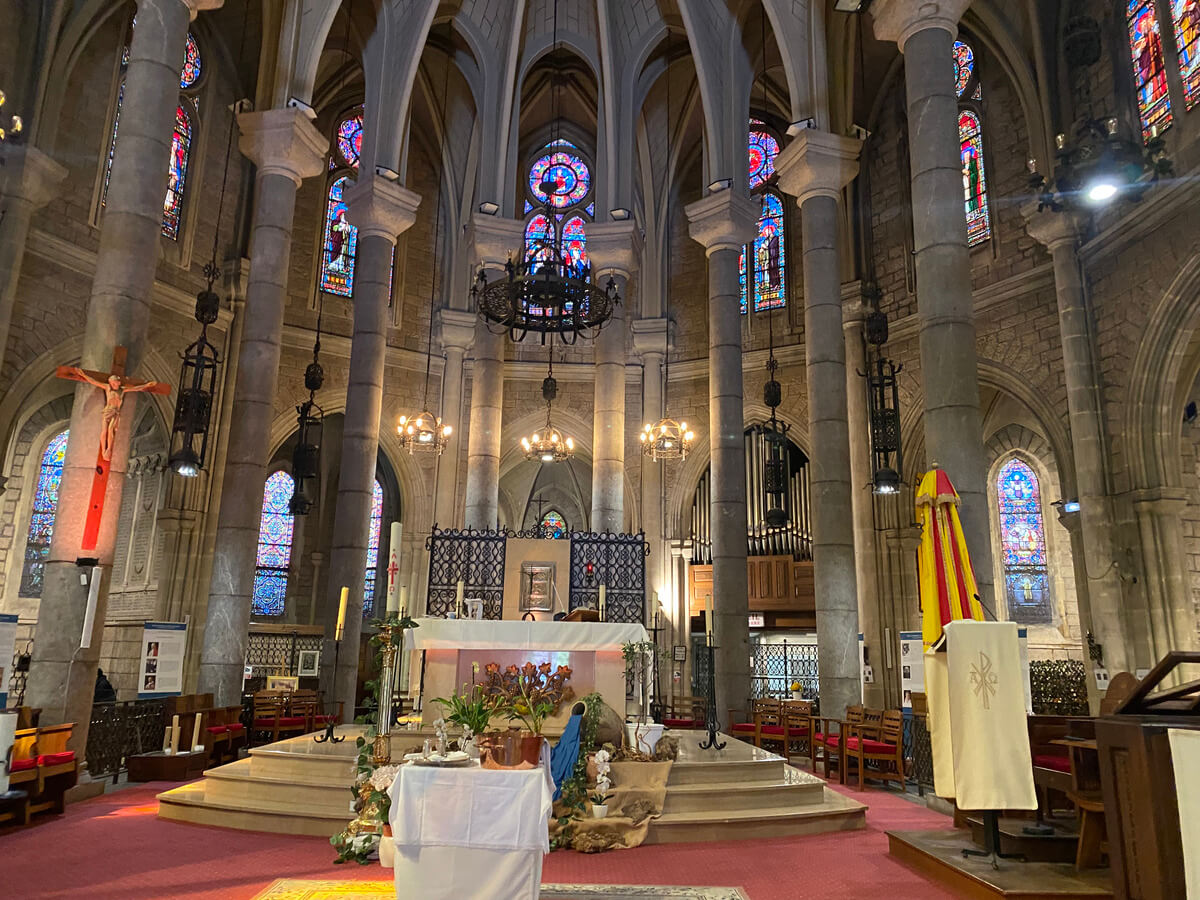
During our exploration of Nice’s city centre, we cannot miss the Notre-Dame Basilica, one of the most impressive buildings in the city.
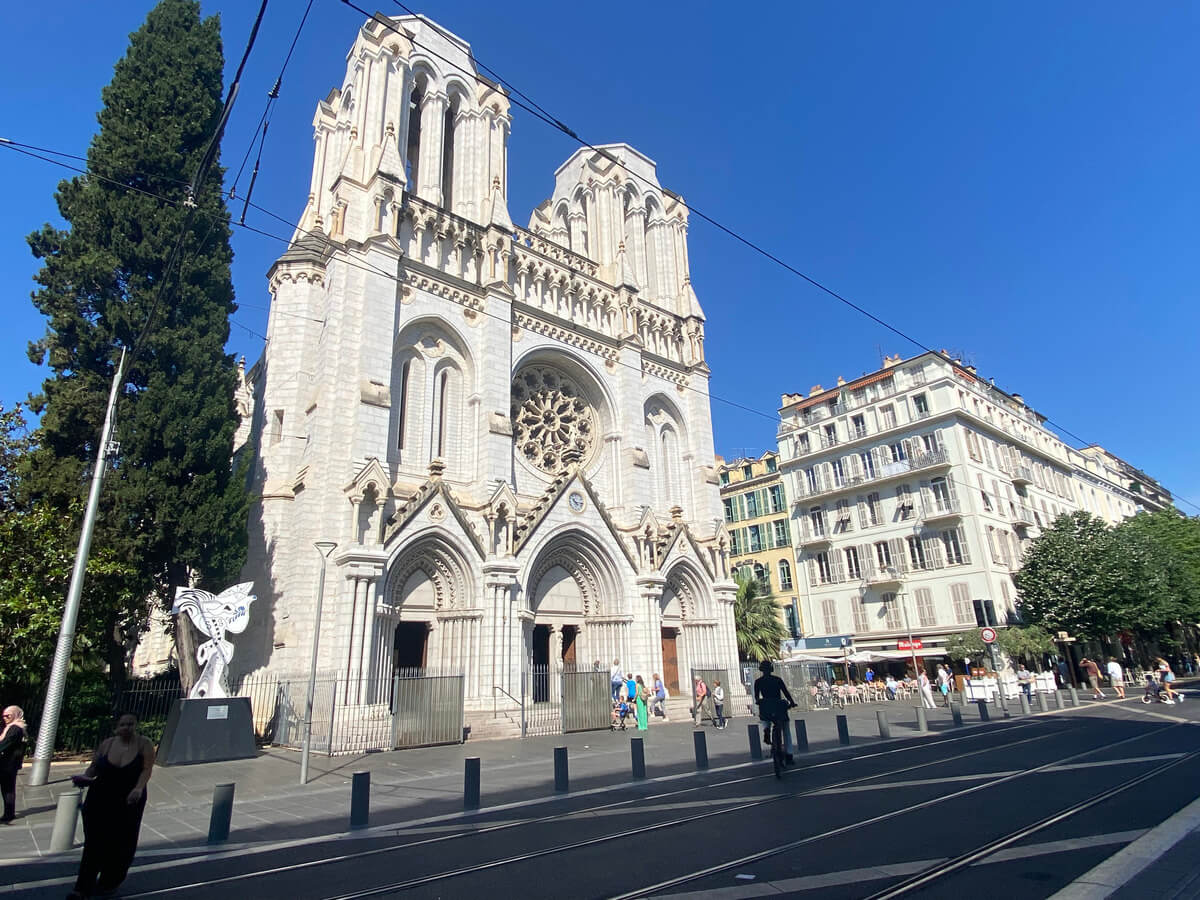
It is often referred to as a smaller version of Paris’s Notre-Dame, thanks to its Neo-Gothic architecture and two imposing towers.
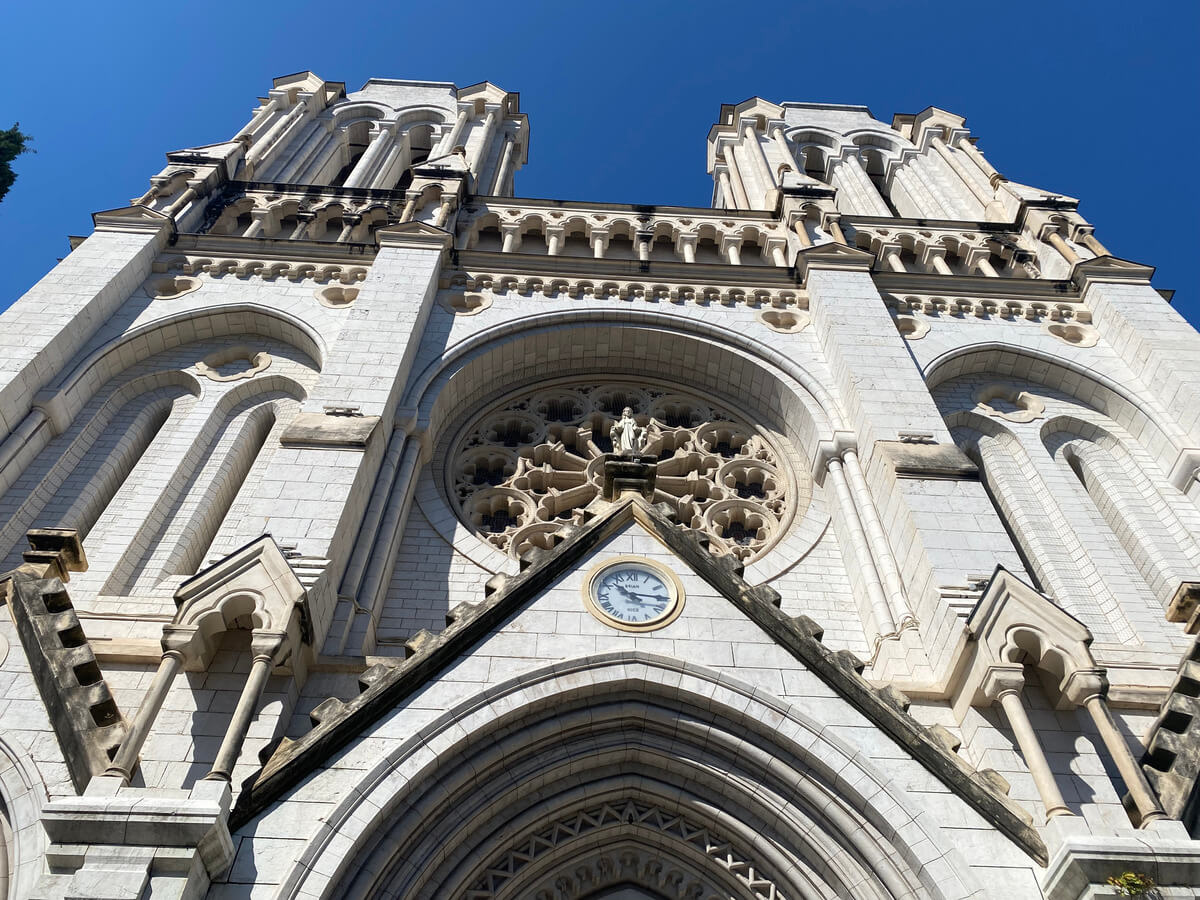
Built in the second half of the 19th century, shortly after Nice became part of France, it is the largest church in the city, although it is not its most important religious building in terms of historical significance.
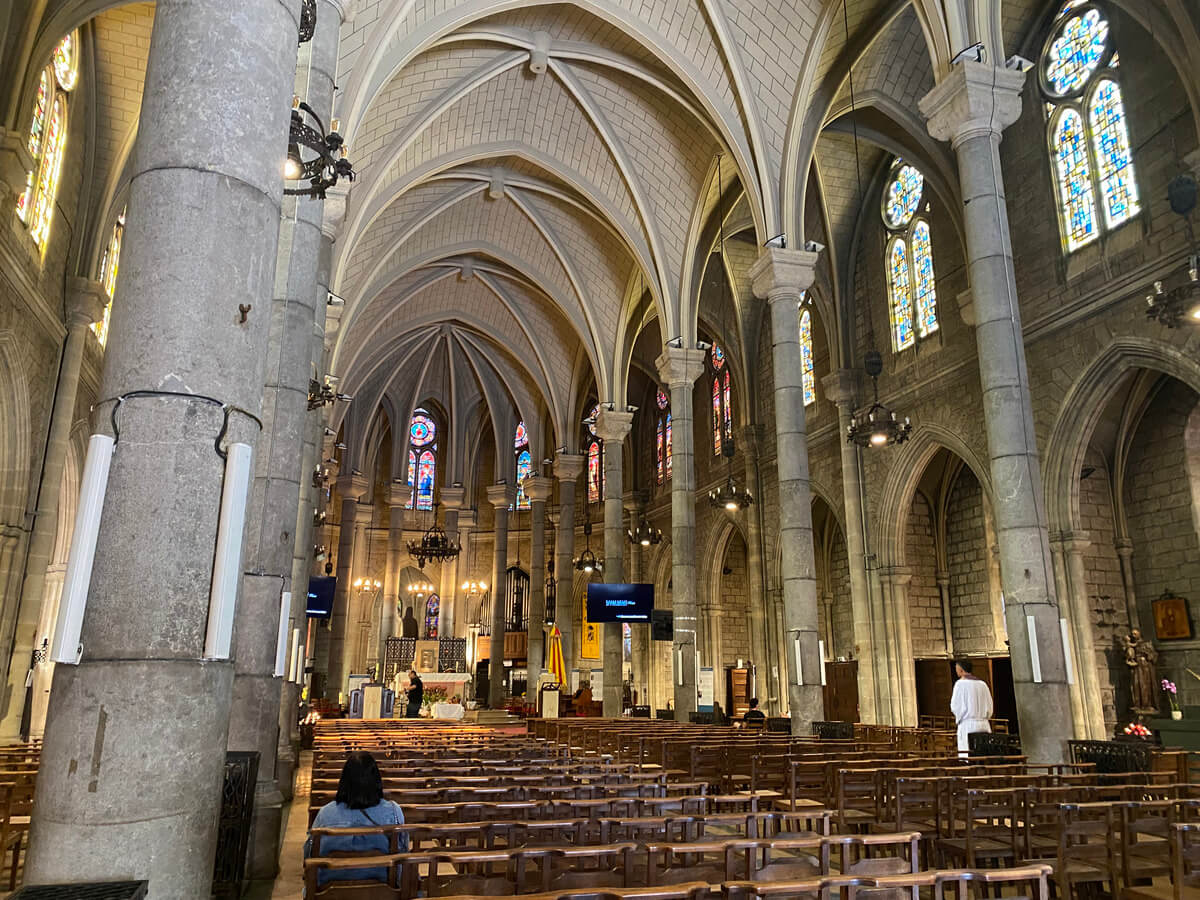
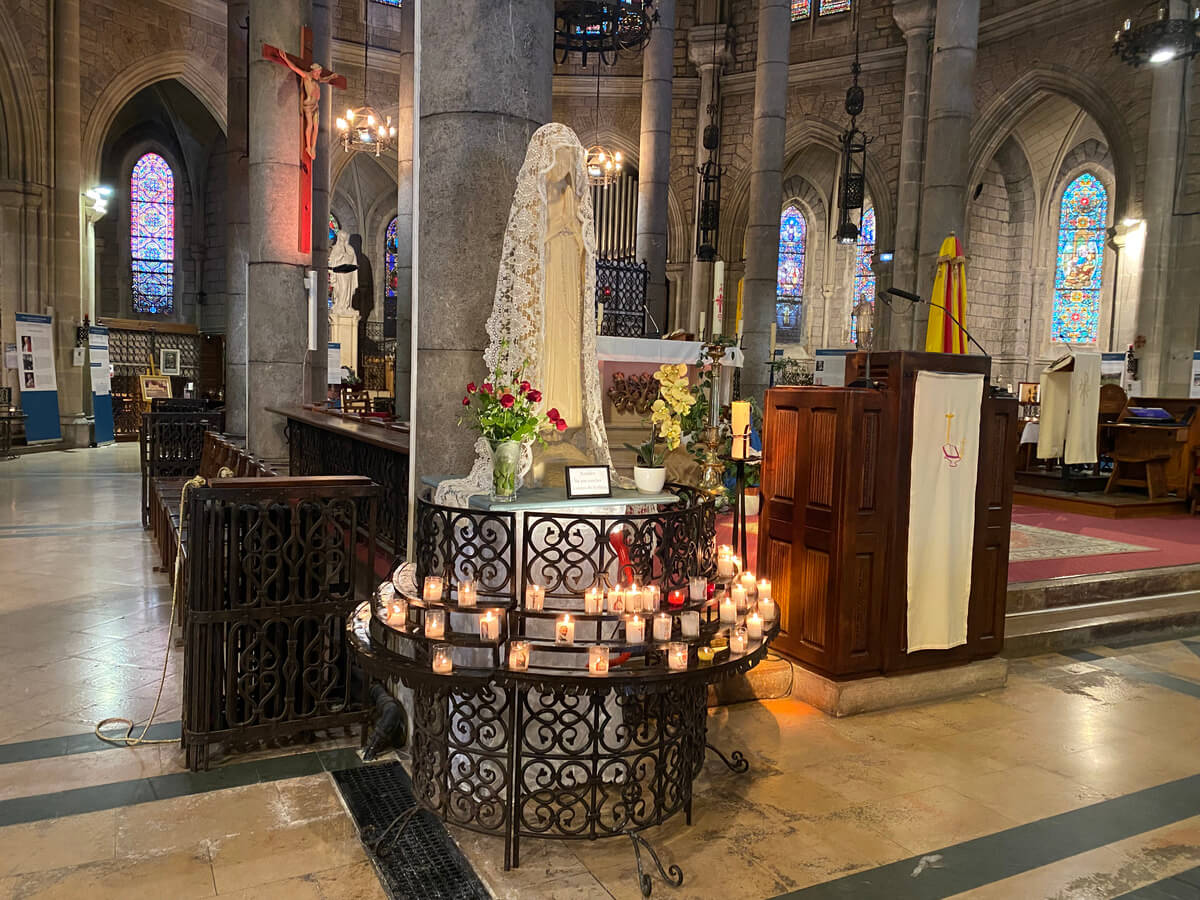
The stained-glass windows are a particularly beautiful feature of its interior. As daylight filters through them, it creates an almost magical atmosphere.
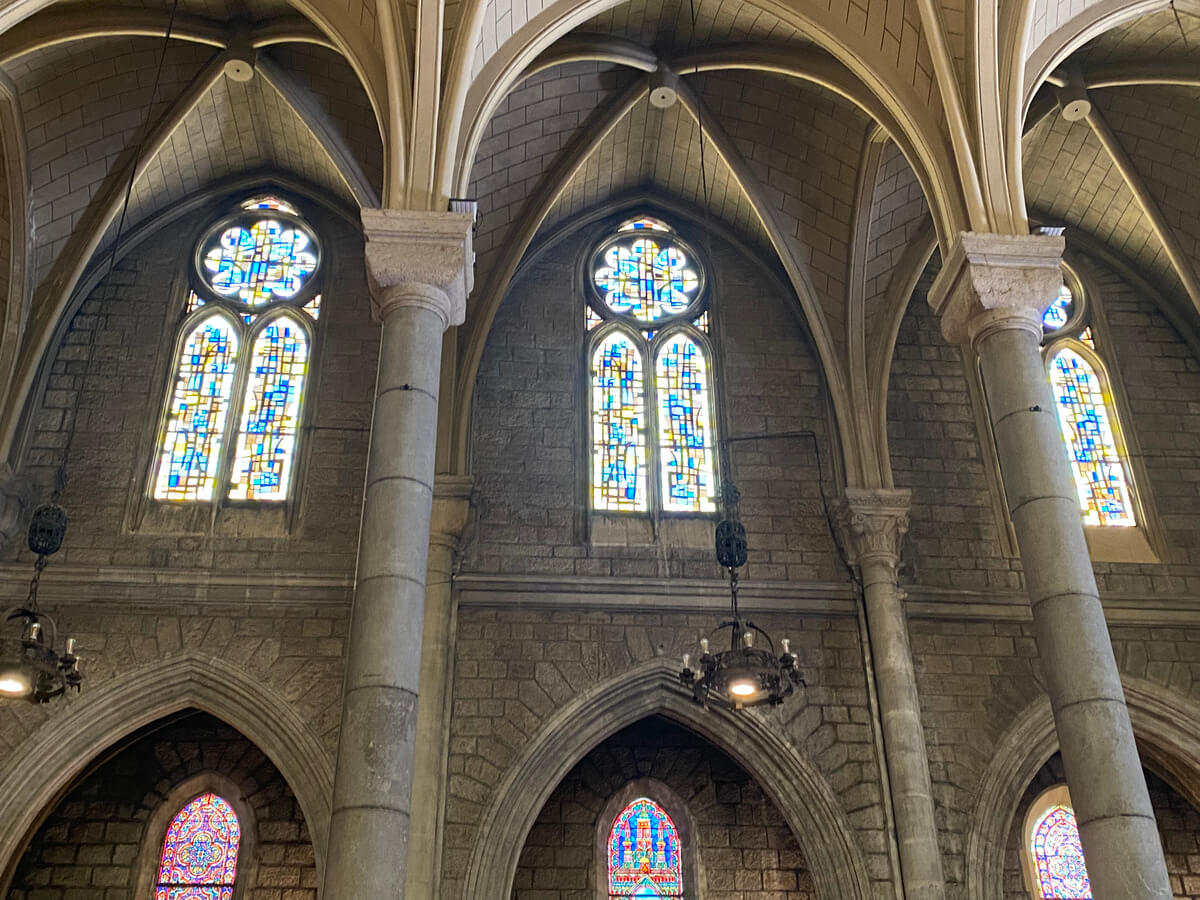
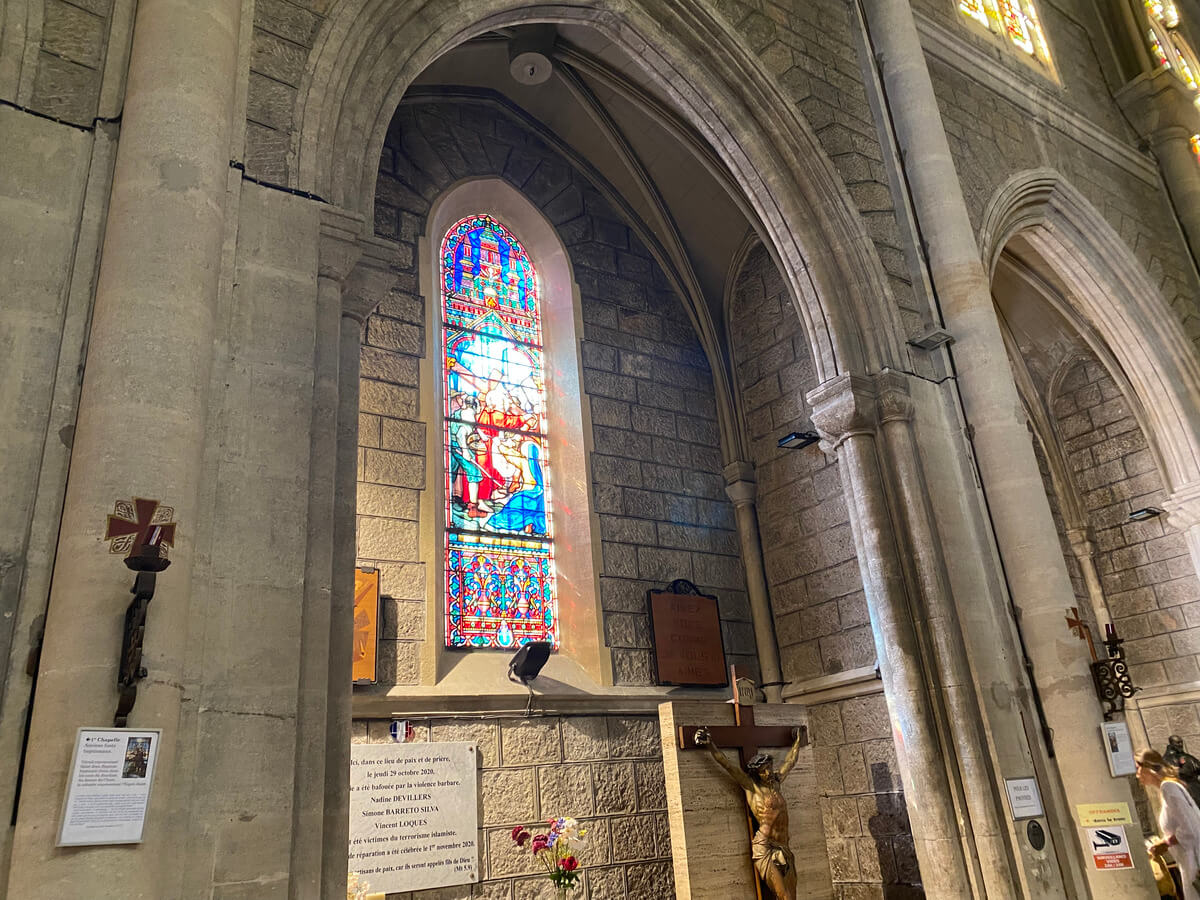
Interestingly, the basilica is not just a place of worship but also a venue for cultural events and musical concerts. It brings together history, architecture, art and spirituality in the middle of the city’s vibrant urban life.
Conclusion
A walk along the Promenade des Anglais and a visit to Place Masséna reveal the very best of Nice: a wonderful blend of the sea, architecture, art and Mediterranean charm.
There is no need to rush here. Slow down, enjoy the views, have a coffee and let yourself get carried away by the rhythm of the city. That is where the true magic of Nice lies.

Have you walked along the promenade and visited Place Masséna?
Is there anything I have missed?
Traveling and enjoying the journey,
Marko Veličković