The Imperial Crypt in Vienna, known as the Kaisergruft, is one of the most important cultural and historical sites in the Austrian capital…
It is located in the very center of the city, within the Capuchin Monastery.
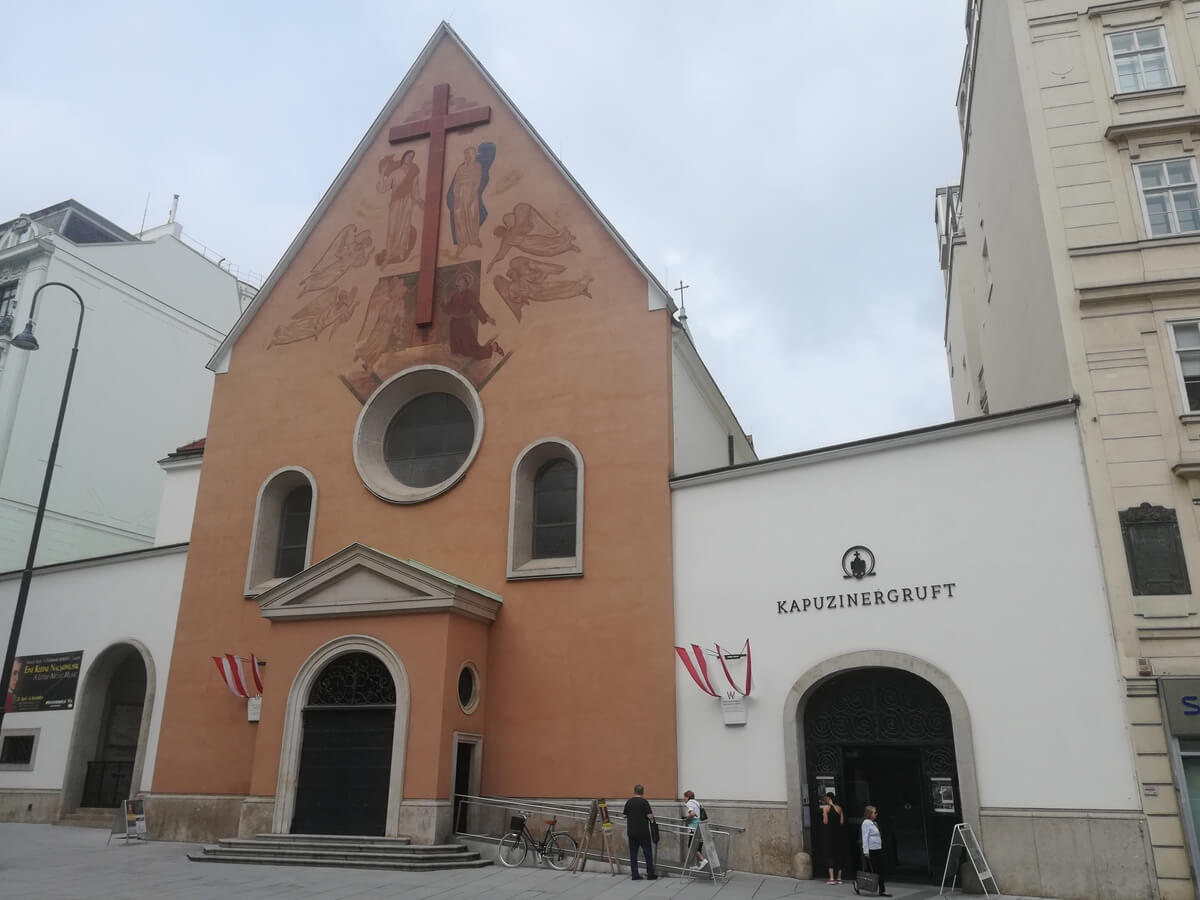
It serves as the final resting place of many members of the Habsburg dynasty, who ruled large parts of Europe for centuries.
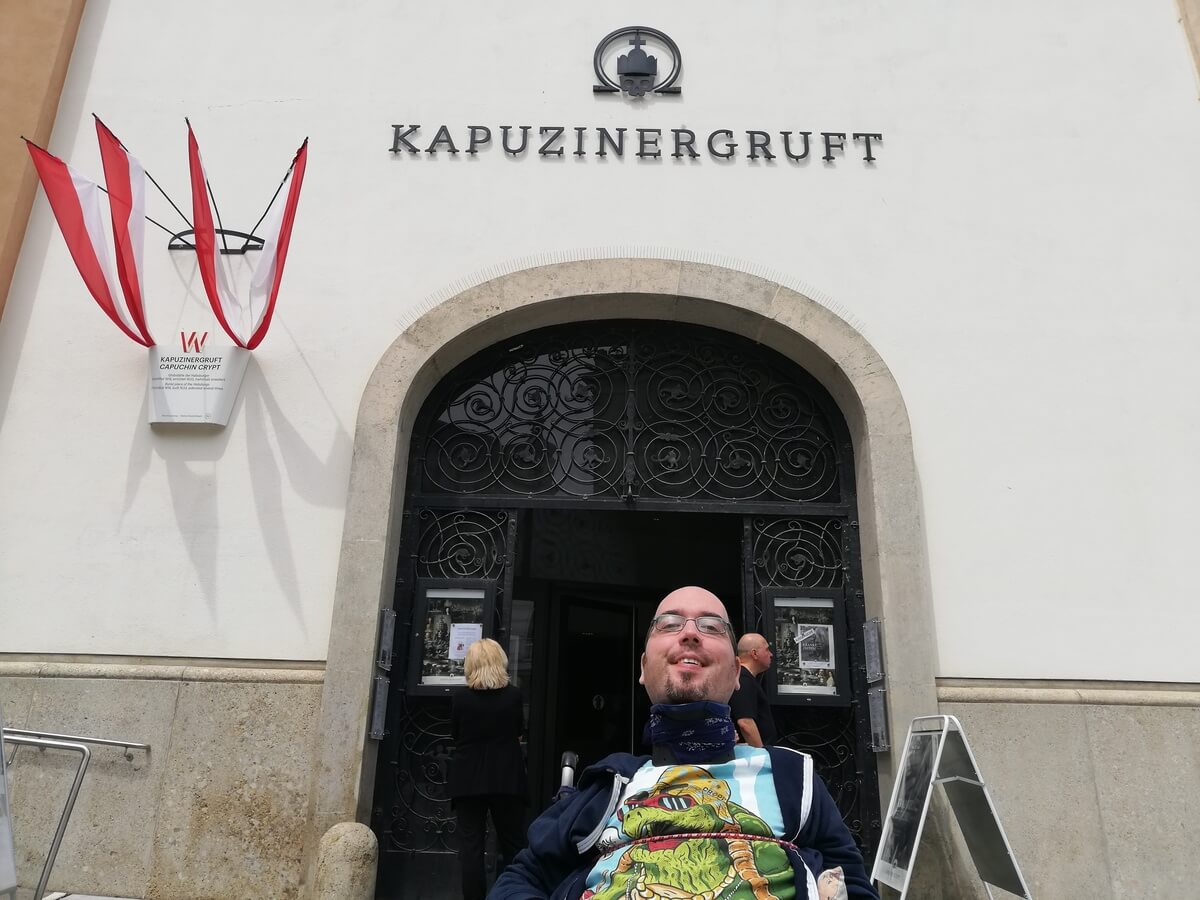
A visit to this site offers insight into the history, tradition, and culture of the Habsburgs, while also providing an opportunity to admire Baroque art.
History of the Imperial Crypt
The idea of an imperial burial site began during the reign of Ferdinand II, who initiated the construction of the imperial crypt beneath the Capuchin Monastery around 1622. It took 11 years to complete due to delays, largely caused by the Thirty Years’ War, which devastated the population in many parts of Europe.
The tombs of Emperor Matthias and Empress Anna—who also founded the monastery—were the first to be transferred here. Since then, the crypt has been expanded eight times. In total, 150 members of the Habsburg royal family are buried here.
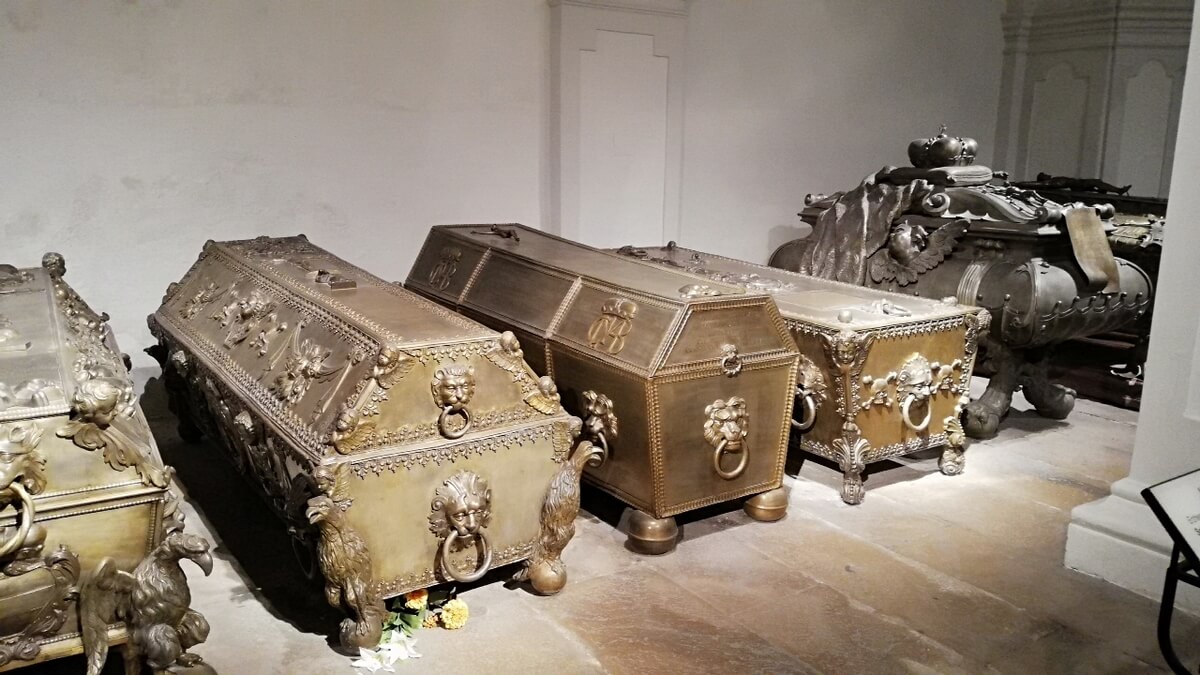
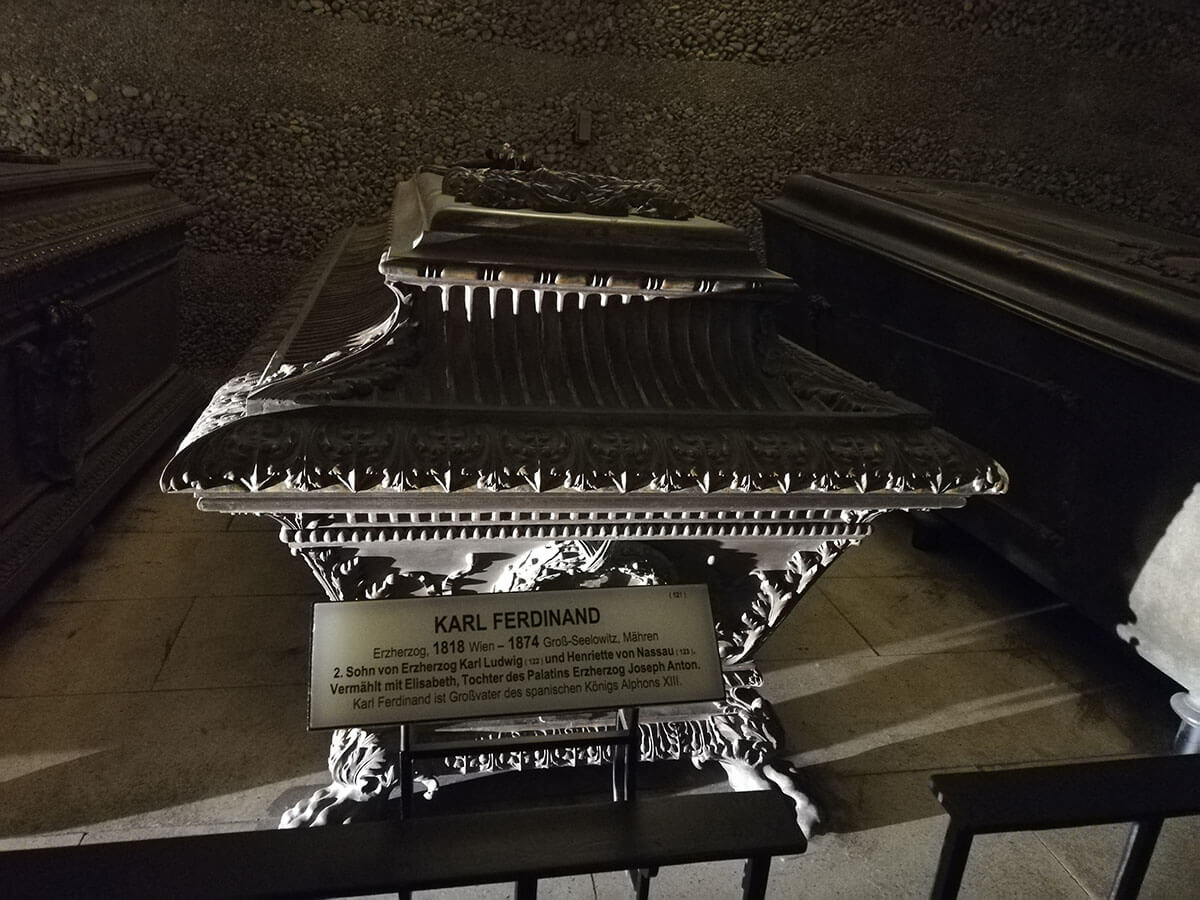
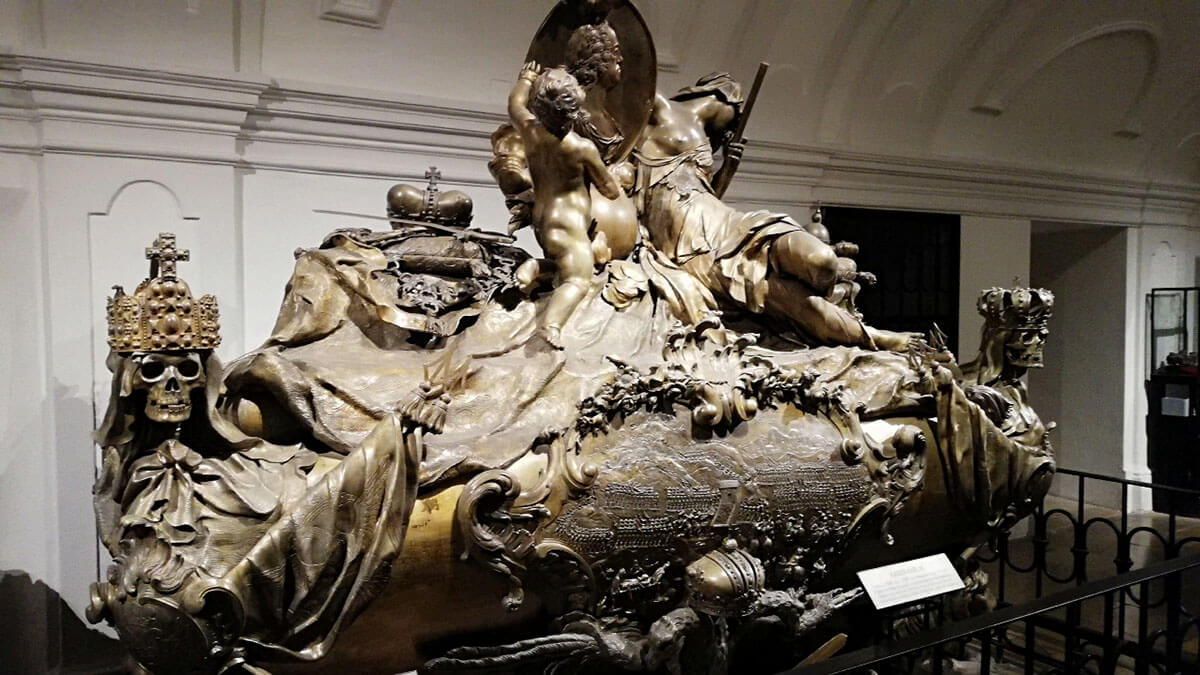
The crypt is a place of striking contrasts. From the outside, it appears modest, while inside there is almost a sense of competition among family members. Be prepared to see coffins ranging from the simplest to the most grandiose, many bronze skulls and ornaments, and a well-ventilated, cool space—something you’ll appreciate if visiting during the summer.
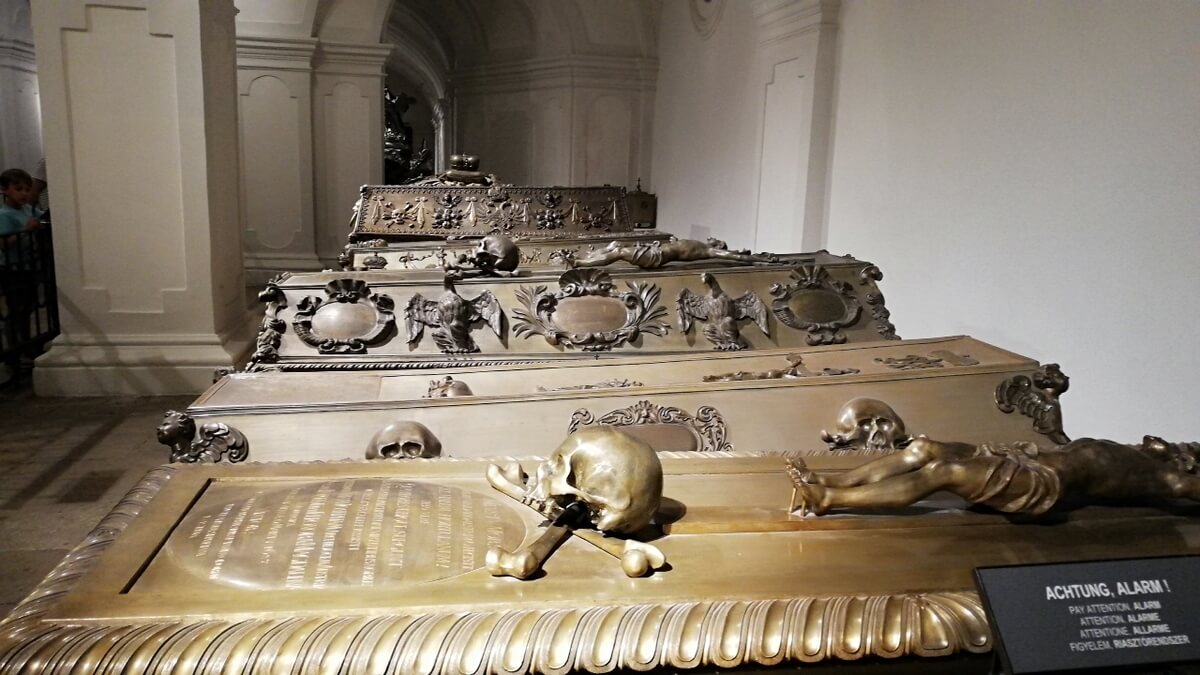
Each sarcophagus is unique to the person buried within and carries symbolic decorations reflecting their character and life. During the Baroque period, sarcophagi were often richly adorned with numerous figures and sculptures.
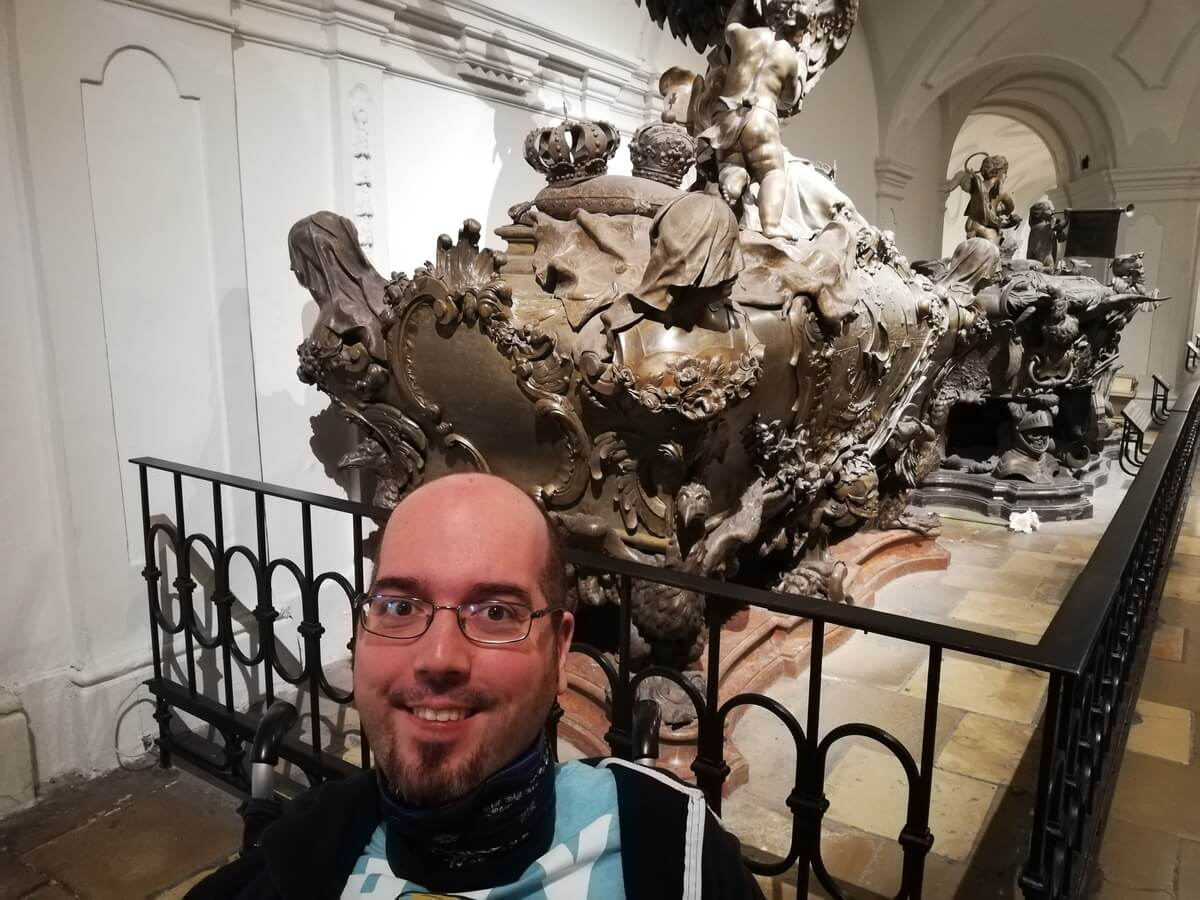
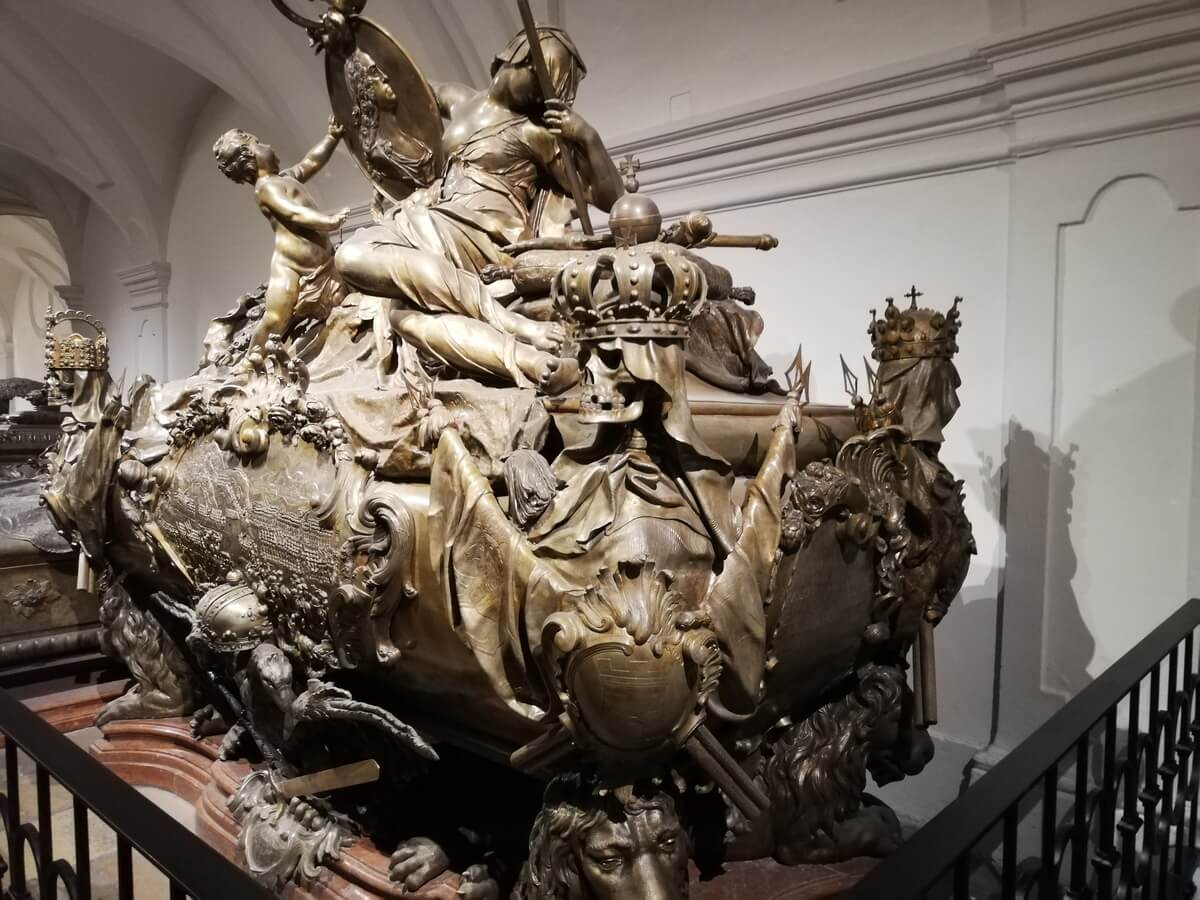
For example, a common symbol is a snake biting its own tail—the symbol of eternity—forming a circle without beginning or end.
Among the most famous individuals buried in the Imperial Crypt is Empress Maria Theresa (1717–1780) and her husband Franz Stephan (1708–1765). Maria Theresa is one of the most well-known rulers in the history of the Austro-Hungarian Empire.
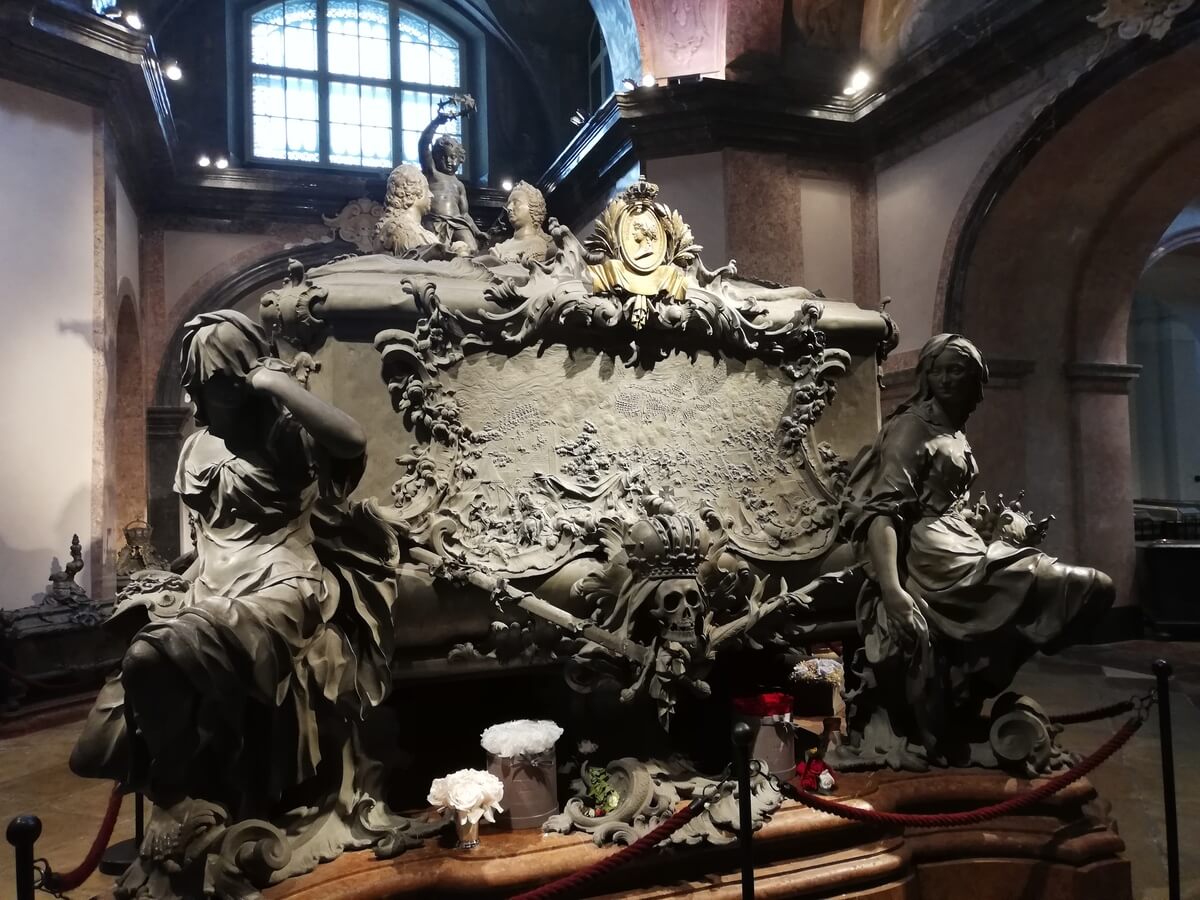
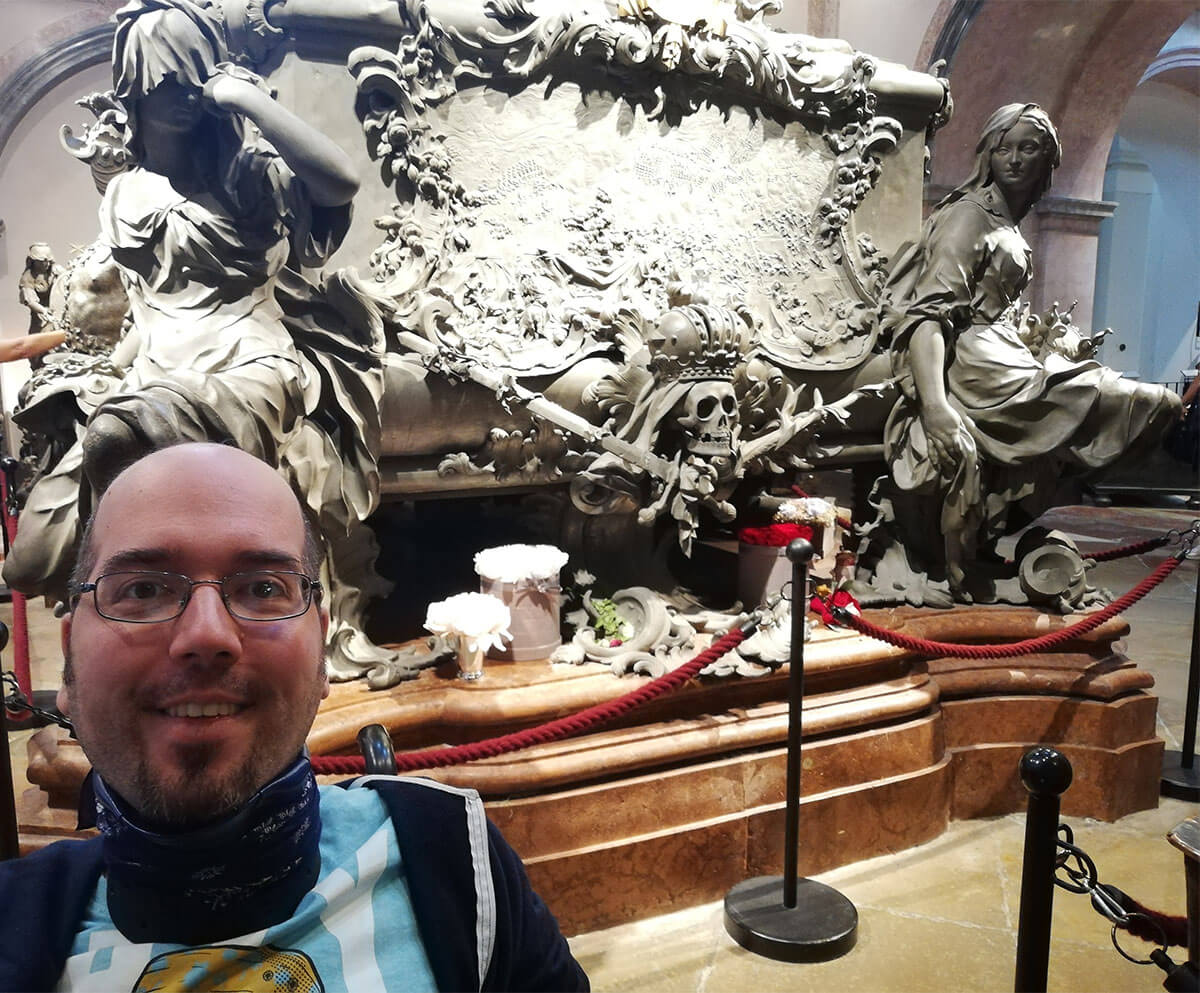
Most of their 16 children are also buried here.
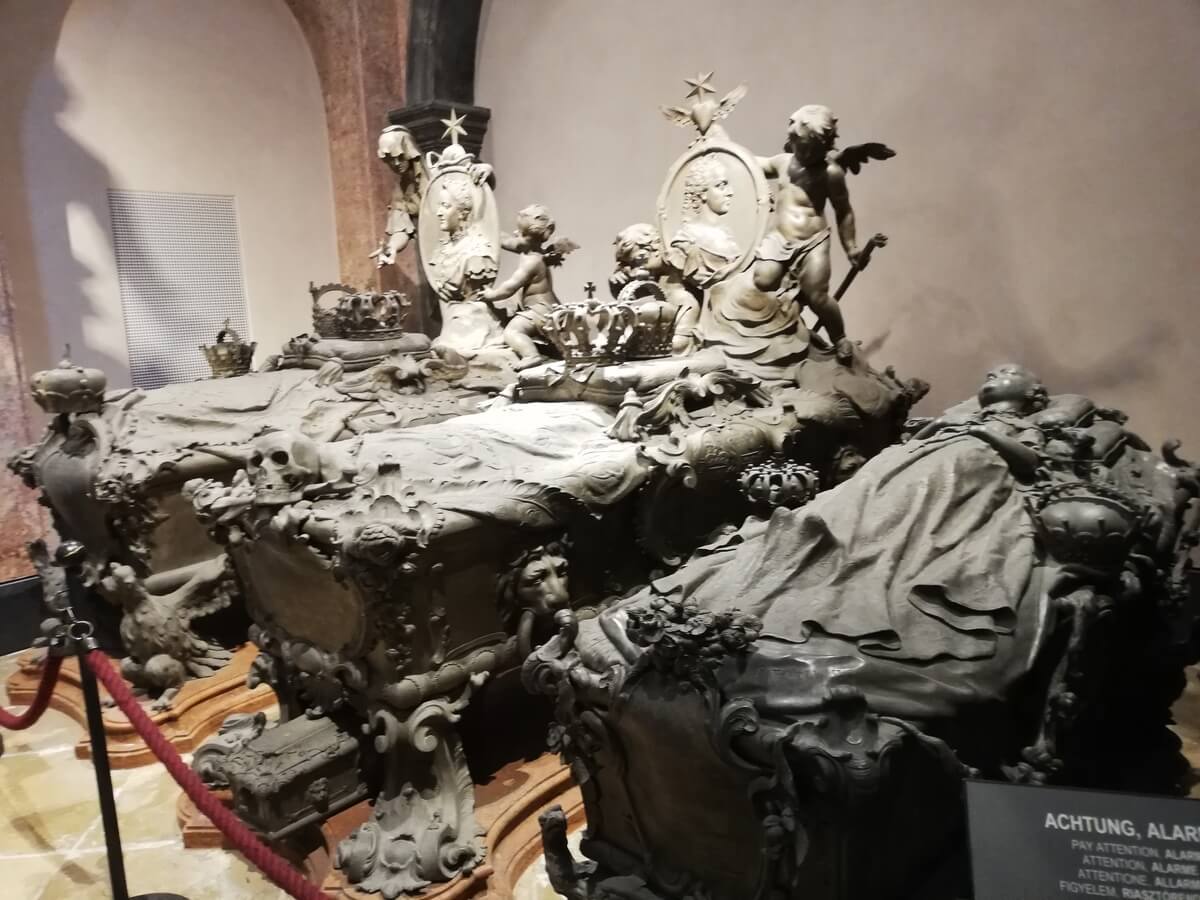
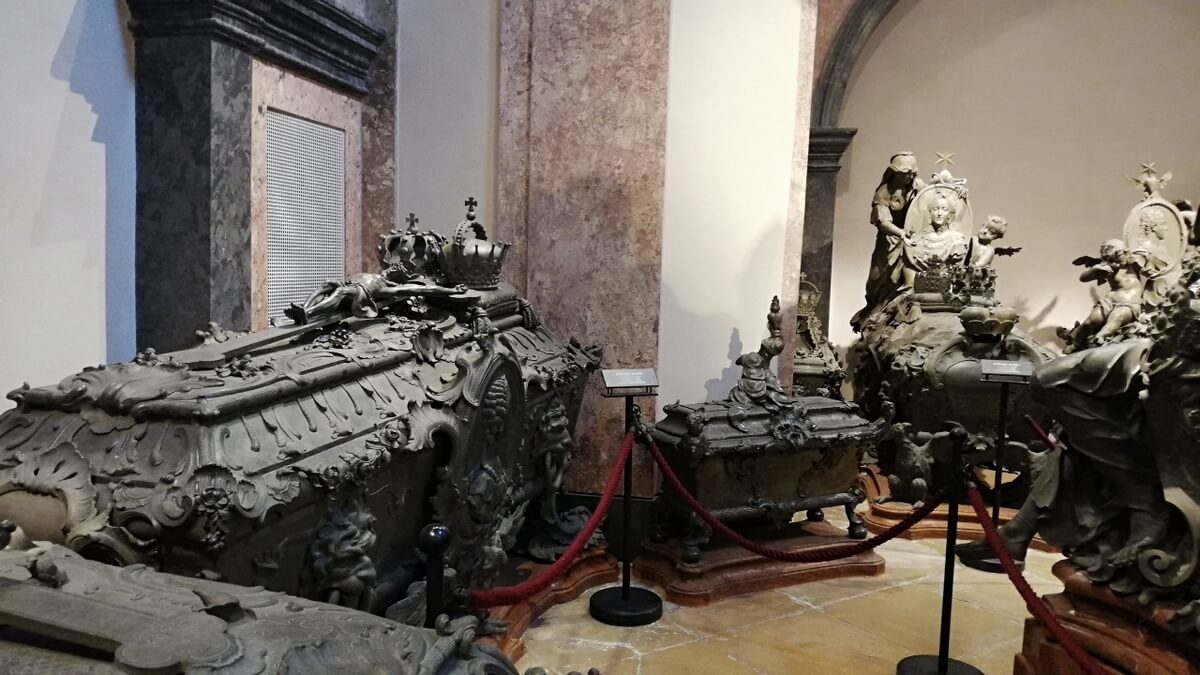
The sarcophagi can be viewed as small works of art.
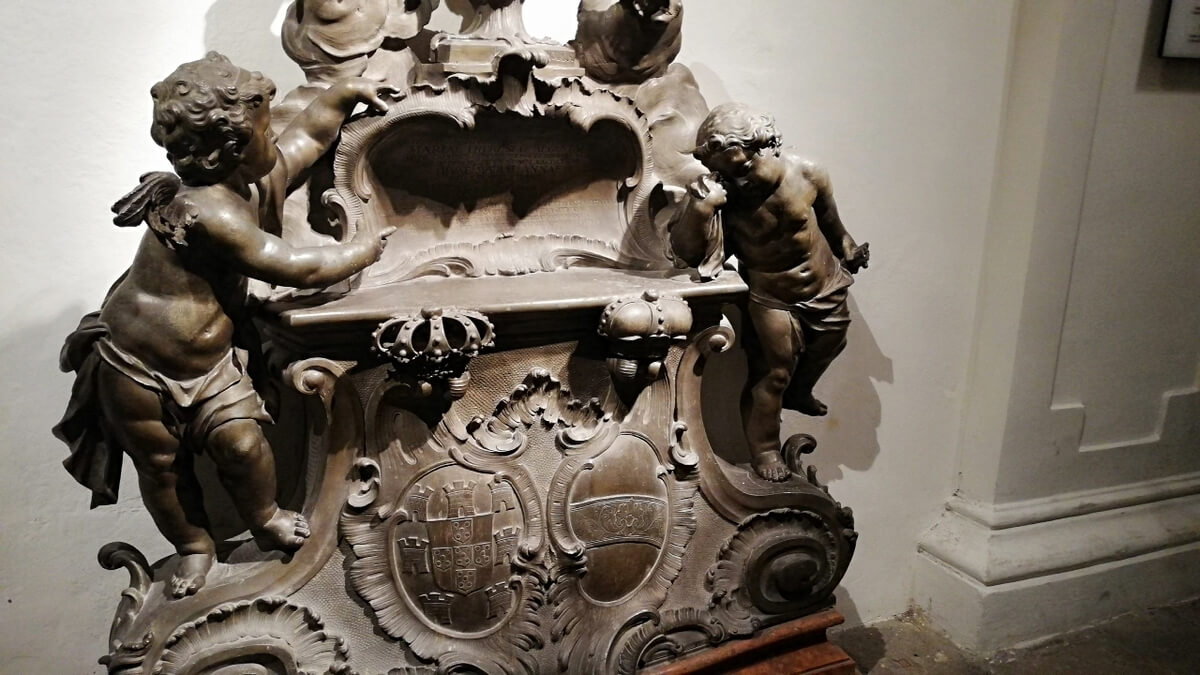
One of the most visited tombs is that of Empress Elisabeth, better known as Sisi. She still holds something of a rock star status today.
Intriguing in life, she remained intriguing even after her violent death at the age of 61. She rests here despite her greatest wish being to be buried somewhere by the sea—likely Achilleion on Corfu, which I also visited.
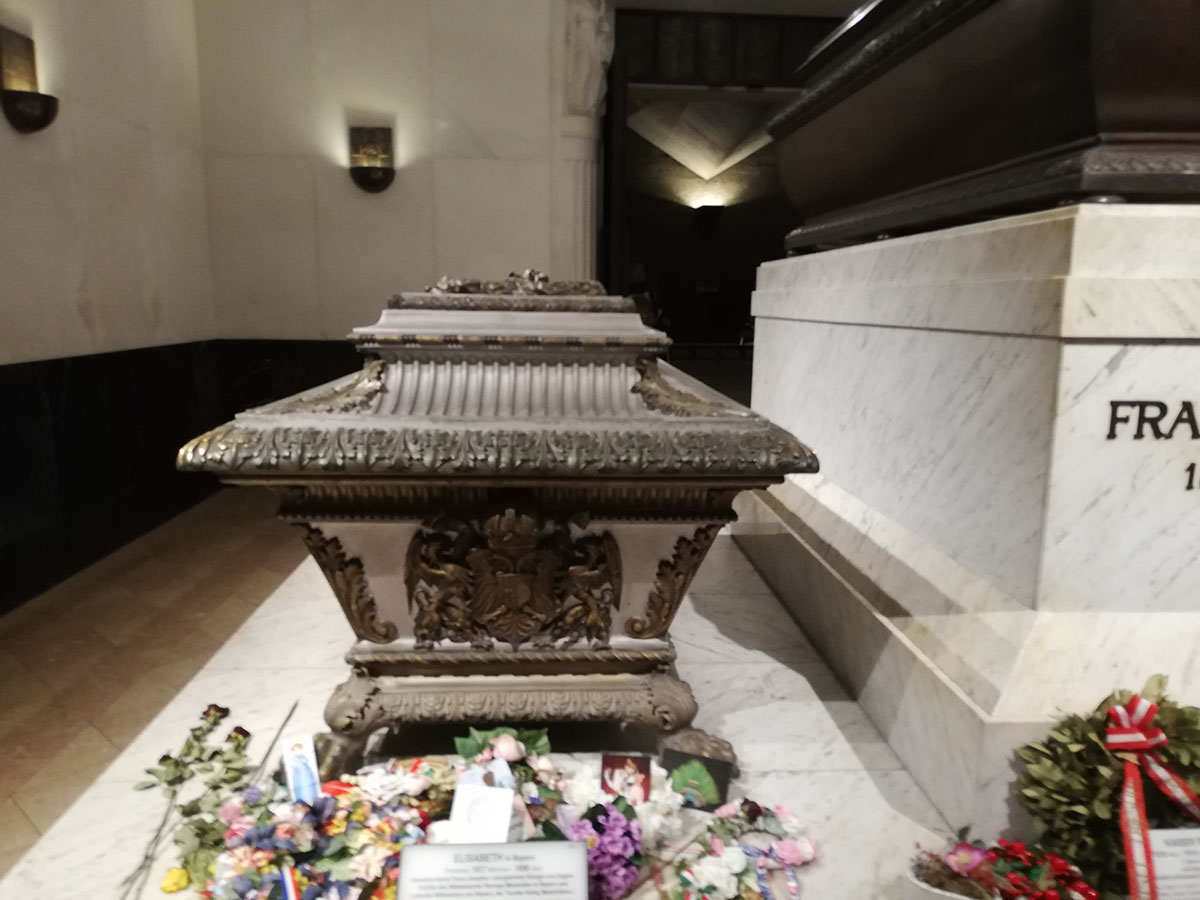
Next to her lie her husband, Emperor Franz Joseph, and their only son, Crown Prince Rudolf, who also died tragically and prematurely.
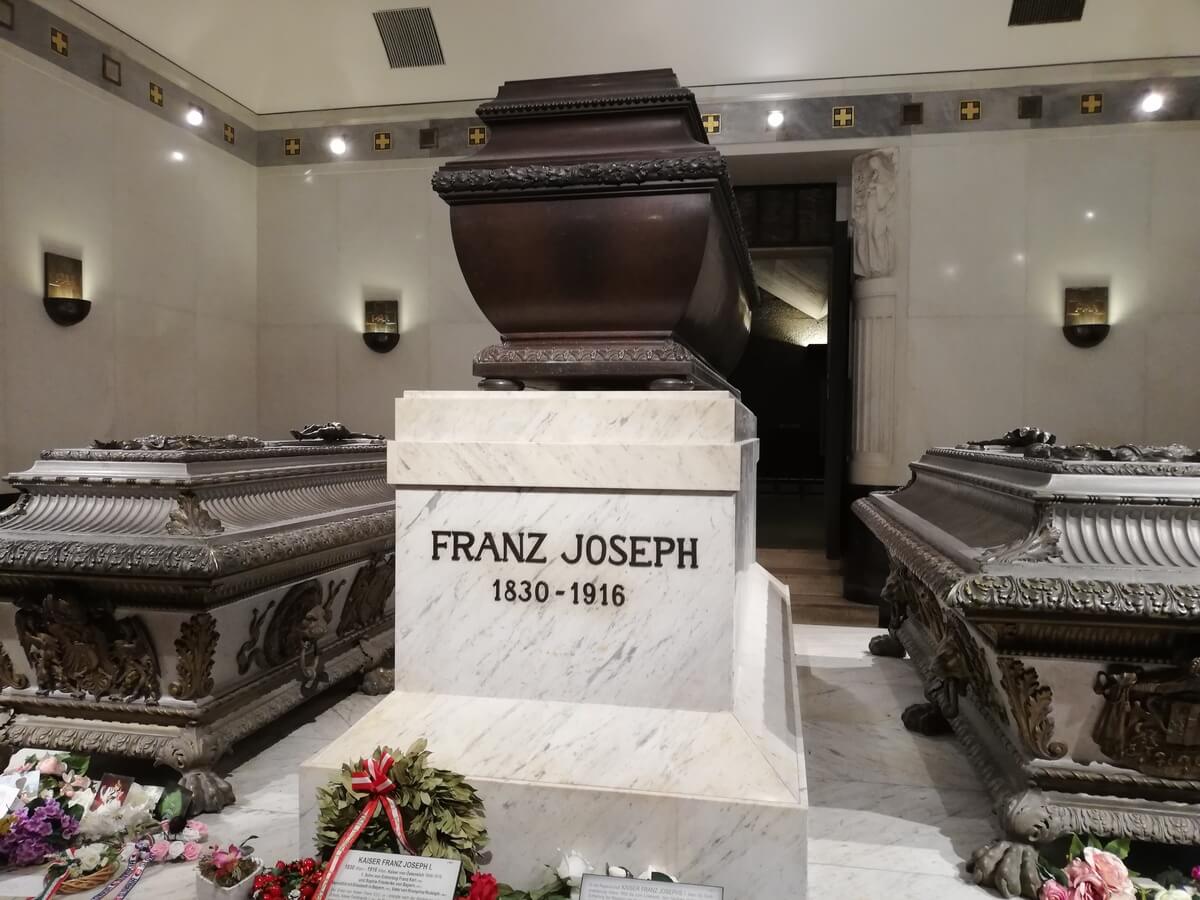
Sisi was assassinated by an anarchist in Switzerland, Rudolf reportedly committed suicide, and his successor Franz Ferdinand was assassinated in Sarajevo in 1914—events that roughly marked the end of the Habsburg monarchy.
These tombs are more modest in appearance—not as grand as those from earlier periods—but they are the most visited, often adorned with flowers.
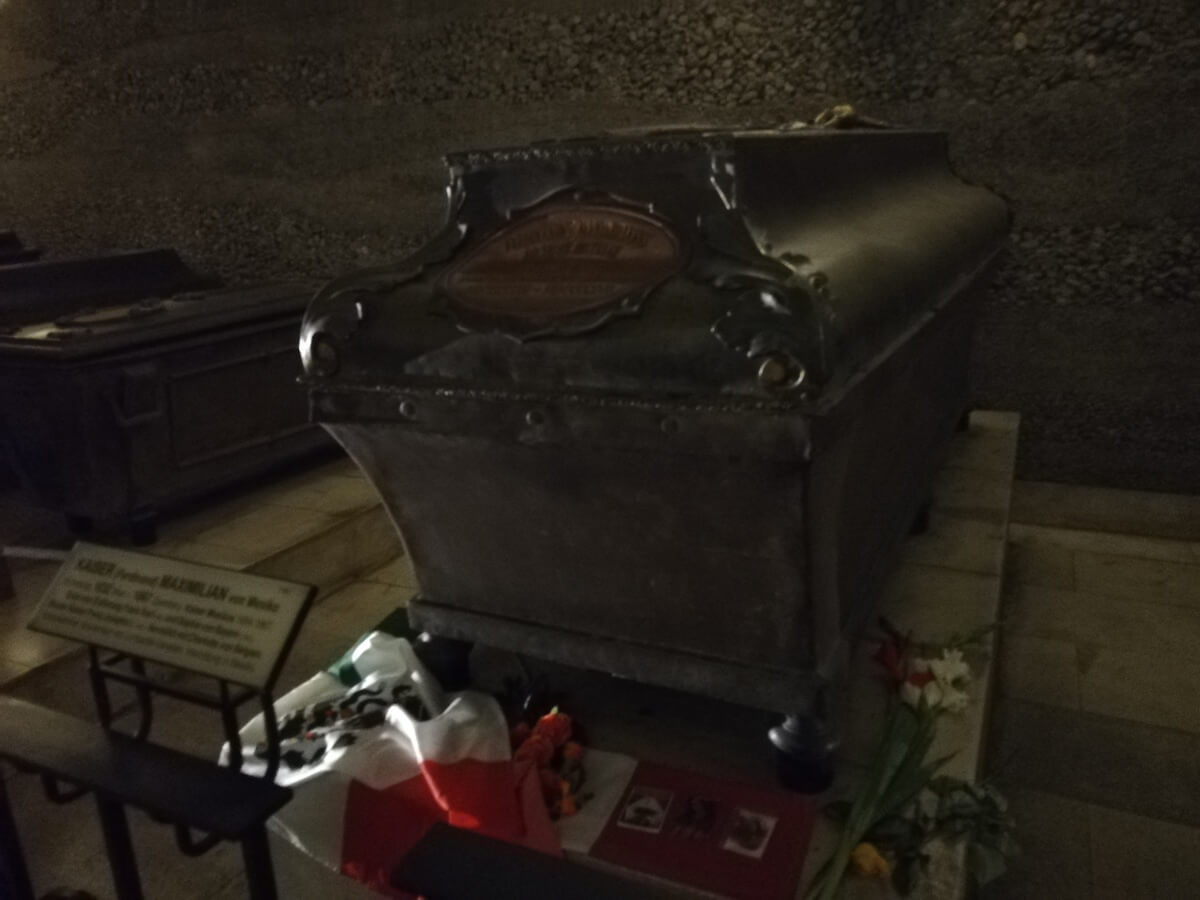
The crypt also contains the remains of Maximilian I, Emperor of Mexico, who had a fascinating life story. I wrote about him here when I visited his magnificent Miramare Castle near Trieste.
Napoleon’s second wife, Marie Louise, is also buried here. For history enthusiasts, this crypt is a holy grail; for others like me, a guide—available in multiple languages at the entrance—is highly recommended.
The last burial in the Imperial Crypt took place in 1949, when Otto von Habsburg, the last heir of the dynasty, was laid to rest here. After that, the crypt was closed to new burials and today functions more as a museum complex than a cemetery.
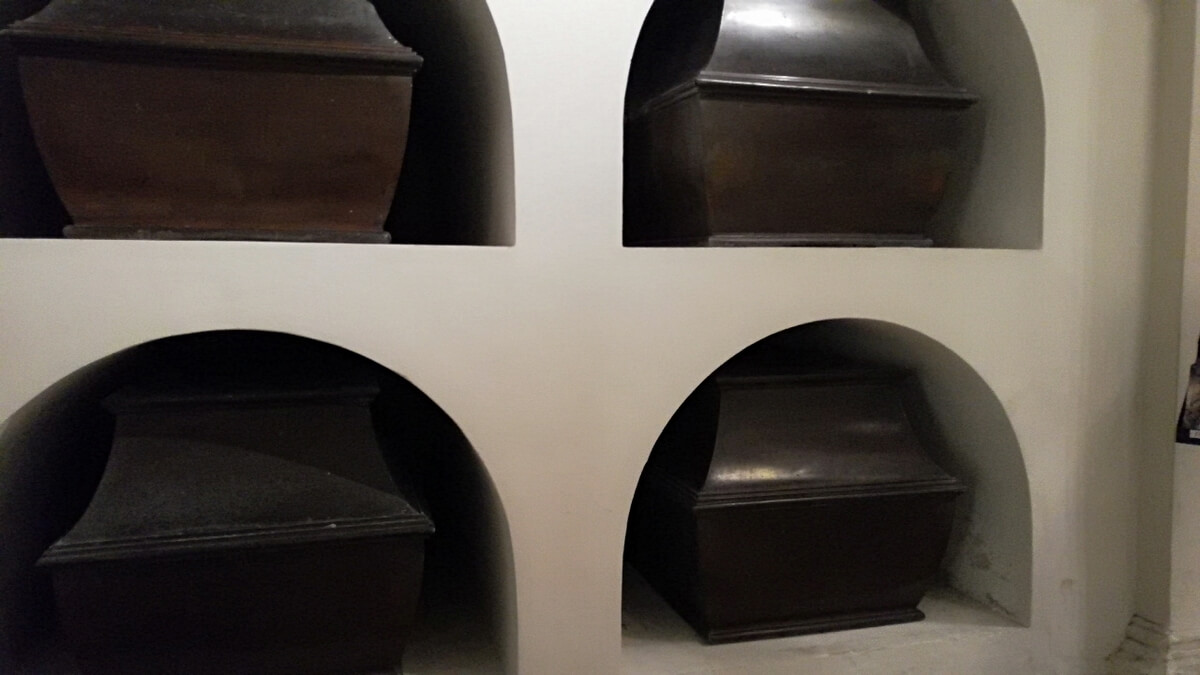
The Kapuzinergruft is fully accessible to wheelchair users.
The rooms you enter are adequately lit to highlight all the details, and the temperature is carefully regulated. A team of experts takes care of the remains.
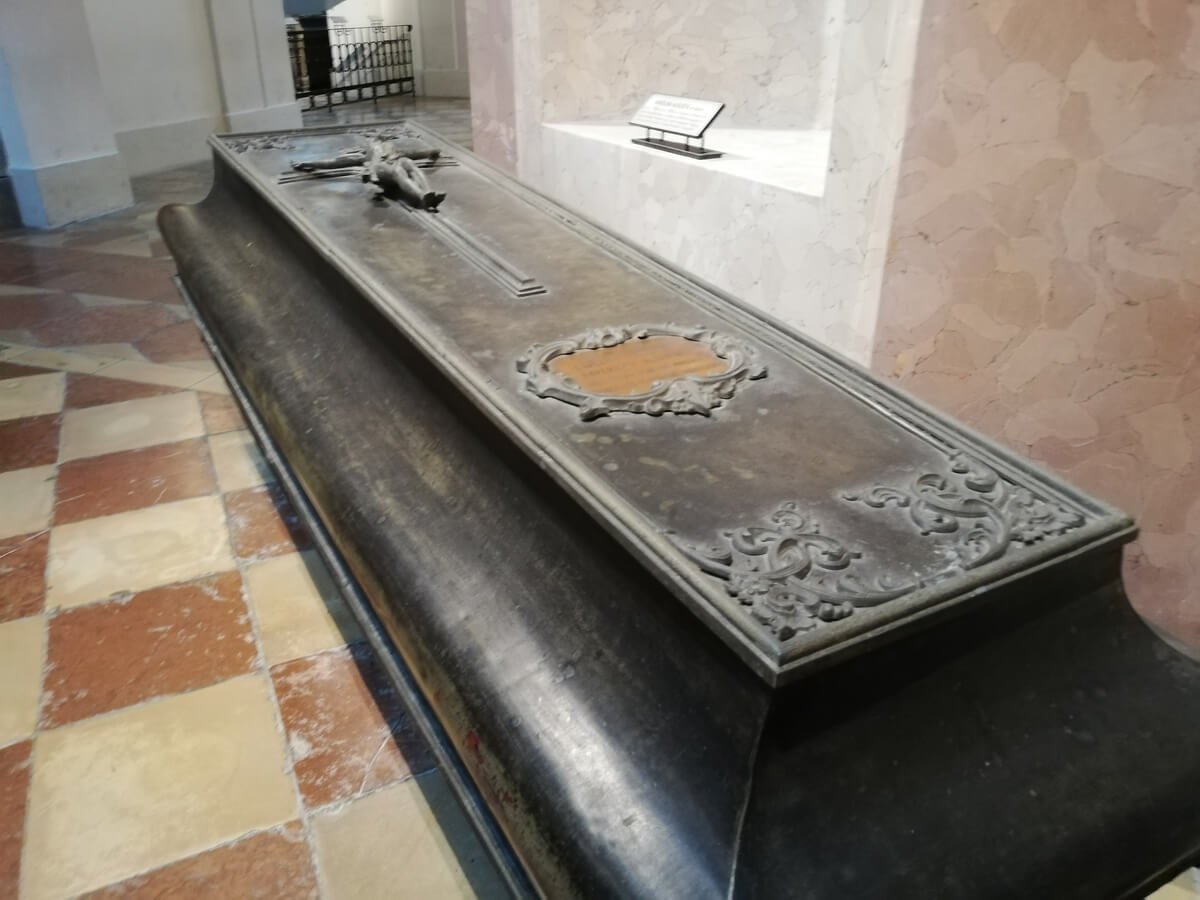
To a careful observer, the coffins may appear quite dusty. This is because standard cleaning methods can cause more harm than good.
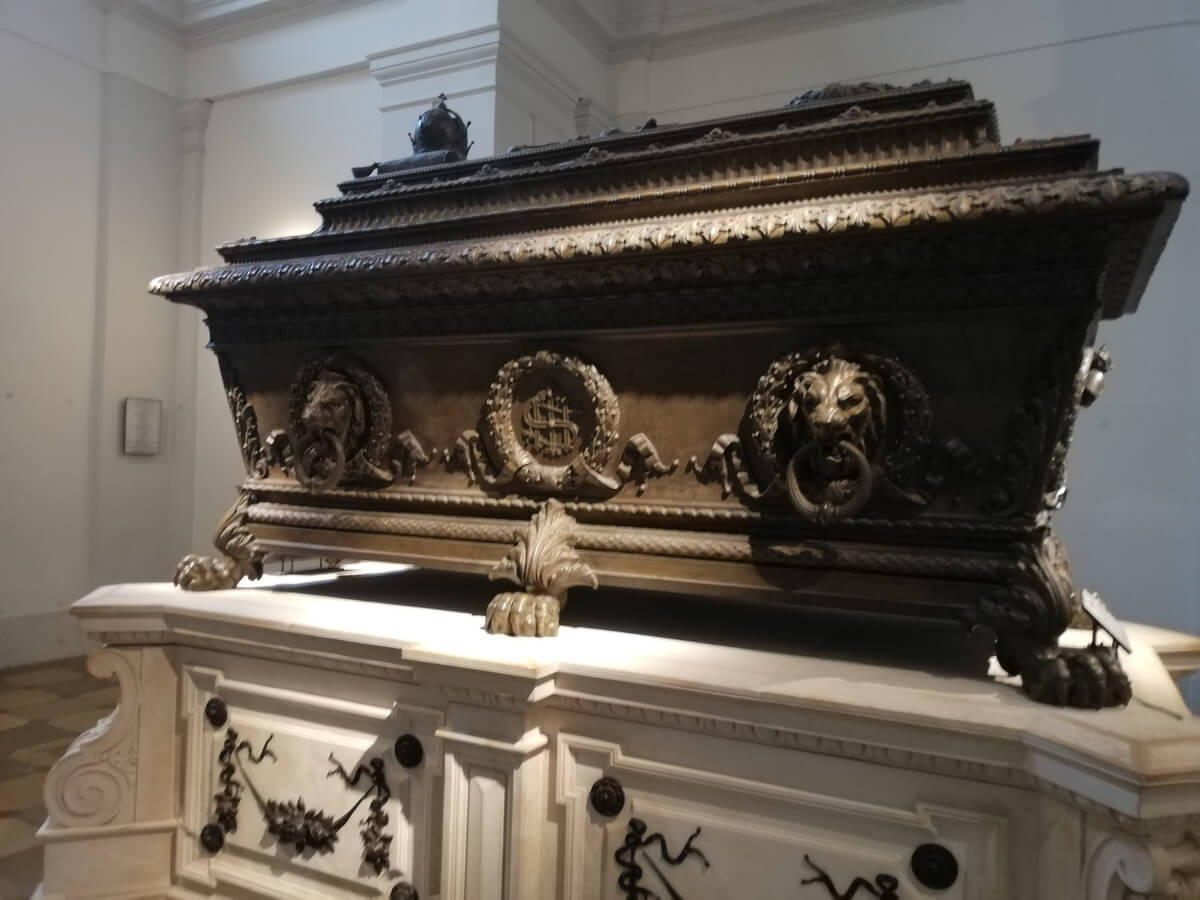
To restore their former shine, staff must undergo special training on how to handle the coffins. The materials vary—copper, tin, or lead—so procedures differ accordingly. Extra caution is required when working with lead, as it can be highly toxic. Cleaning a single coffin can take several hours.
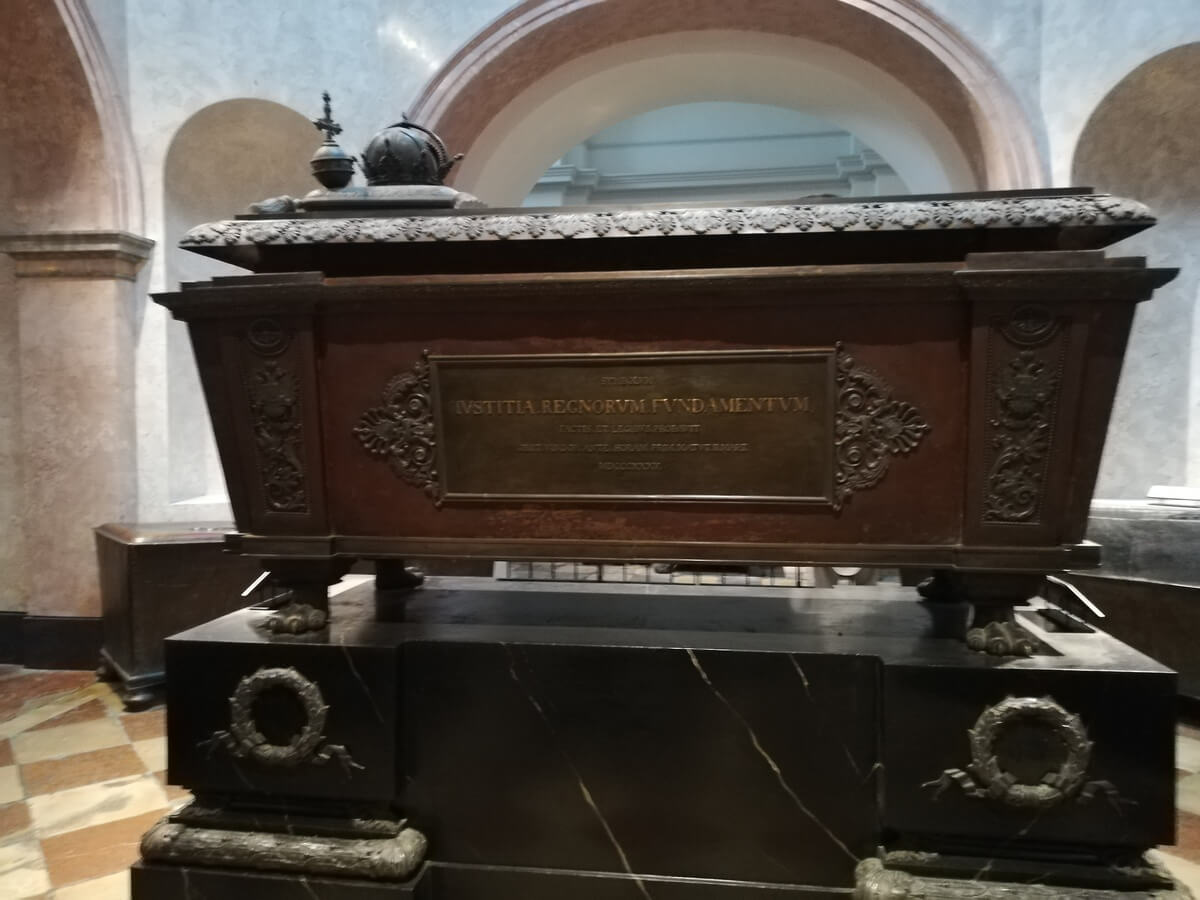
Despite all efforts, some coffins are covered in resin that has turned gray over time, and removing it would cause more damage than benefit. So the coffins are not unclean—they are simply extremely old.
Conclusion
If you don’t linger too long, you can tour the crypt in about 30 minutes. The Imperial Crypt is definitely a place worth visiting.
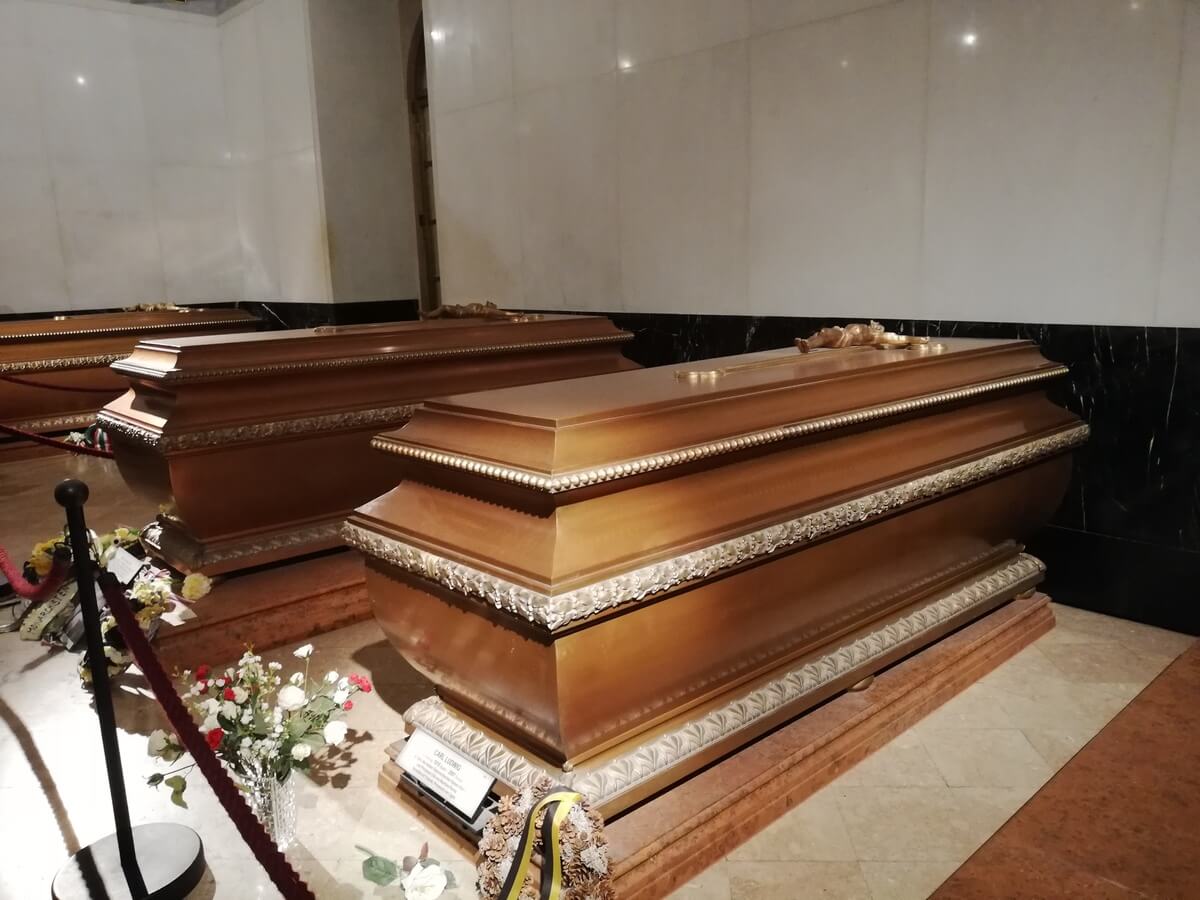
During the summer, more than 100,000 people visit the crypt, making it one of the most visited monuments in Vienna. Still, it’s important to remember that this is not just a tourist attraction, but also the final resting place of a dynasty that shaped European history.
If you’ve visited the Hofburg, about which I wrote elsewhere, then this crypt feels like the conclusion of that story, where crowds of tourists, myself included, realize that even the famous and the wealthy are ultimately just ordinary mortals.
You can wash away the bitter taste of history with a good beer and sausages, because when you’re in Vienna…

If you enjoy my travel stories, feel free to buy me a coffee. The button is in the top right corner of the sidebar on the site.
Have you visited the Kaisergruft?
Did I miss anything?
Traveled and enjoyed,
Marko Veličković