Rosenborg Castle is a royal palace from the 17th century. It is located almost in the very center of Copenhagen and is very easy to reach…
The palace was built in a specific Danish-Renaissance style, which can be seen all over Copenhagen.


This palace was built by Christian IV in the early 17th century as his summer residence.


However, over time the palace became his favorite place, so he died here in 1648. After his death, the heirs modernized the palace several times.

However, as early as 1720, Rosenborg was permanently abandoned by the royal family in favor of Frederiksberg Palace. In 1838, the castle became a museum.


A visit to the museum offers visitors the opportunity to glimpse into the life of Danish monarchs. I didn’t enter because Rosenborg Castle is not wheelchair accessible.


What is also not available to me and my colleagues is a visit to the royal jewels, which are located in the basement of Rosenborg Castle.

The royal jewels are presented when there are special occasions, such as national holidays, New Year, etc. Apart from the splendor, it would be interesting to see the umbilical cord of Frederick III and his children, which are also kept here.

There is a large water moat around the castle.

That trench has its inhabitants in the form of big fat carps, who are always in the mood to eat.

The entrance to the castle from the direction of the park is guarded by these two lions.


In any case, Rosenborg Castle is one of the must-see places when you are in Copenhagen.

Park next to the castle
The castle is surrounded by a beautifully arranged Royal Park (Kongens Have). This is the oldest park in Copenhagen.

The park is open every day with slightly shorter hours in the winter months. Entrance to the park is free.
The King’s Park was formed at the same time as the Rosenborg Castle under the supervision of the already mentioned Christian IV. Initially, it was intended only for use by the royal family. It was opened to the public only in 1770. Since then, it has undergone numerous changes, but the basic contours have remained the same.
For example, the Knight’s Path (Kavalergangen) and the Lady’s Path (Damegangen) have remained in their original form to this day.


Over the years, many new elements have been added, such as a modern playground for children and other modern elements.

With its size of 40 acres, Kongens nitorv is not one of the largest parks in the world, but every corner of this park is used to the maximum.

In the park there is a statue of the most famous Danish writer Hans Christian Anderson.

According to some information, the statue was made during the lifetime of Hans Christian and allegedly he personally gave instructions.

The statue was placed in the park in 1880 after the writer’s death. This is not the only statue dedicated to this great Danish writer. The second one is located next to the City Hall, in the very center of the city and is a favorite place for taking pictures.
The park has many hidden corners that you should look into.


It is a great shelter from the sun because there is a lot of shade.

There are lots of manicured lawns where you can lounge and have a picnic. Locals use it a lot, so it’s very crowded on weekends.

In the King’s Park there is a section, which can be called the longest herbarium in Northern Europe. It is a trellis about 240 m long, in which various types of plants alternate, and it is also called the English garden. A walk through this part is very informative and interesting.


There is also a rose garden with a statue of Queen Karolina (1796-1881). It adjoins Rosenborg Castle and you can rest here to your heart’s content.


Next to it is a statue dedicated to Little Gunver.

Little Gunver is a song, which was first performed in a Danish theater in 1780. The song about Little Gunver is about a young girl who is drawn into the sea by a seductive but evil fish man.
In one part of the park, in 2001, a section with roses, trellises and a small pavilion in the center, called Krumspringet, was added.
The name can also be translated as “avoidance” because the basic idea for the existence of such a hidden corner was to avoid unwanted encounters during a walk. Weddings are held here today. If you want to read a book in peace, this is the place for you.

You can come to the park armed with food and drink and want to have a picnic, and if you didn’t come prepared, you can console yourself with the offer offered by the nearby Torvehallerne food hall as well as the wide range of street food in this district. This time I opted for something warm and comforting to continue my Danish adventure.


Conclusion
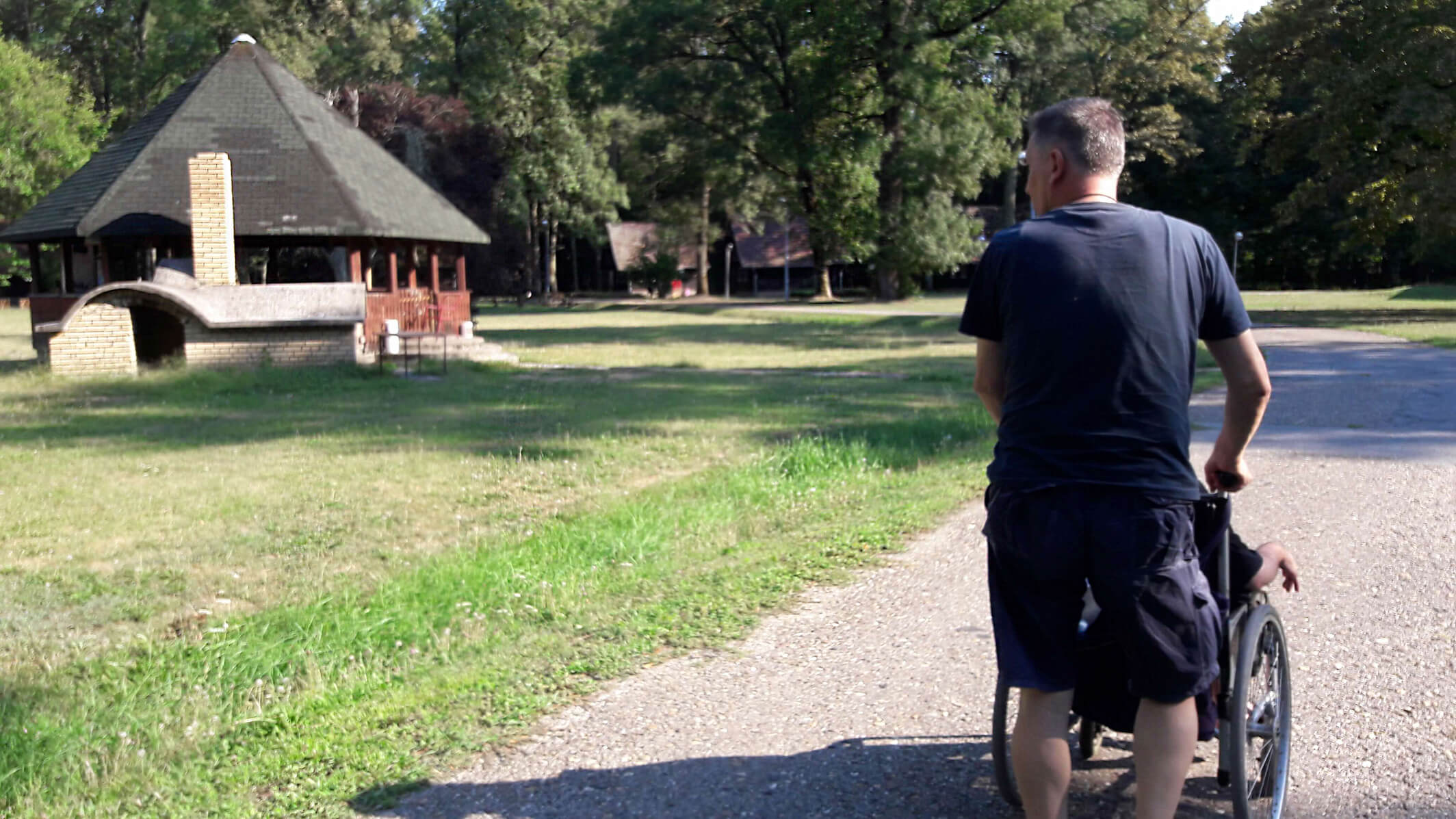
And finally, I can absolutely recommend a visit to the King’s Park. There are three reasons. It is wheelchair accessible, has flexible opening hours and is completely free.

Have you visited Rosenborg Palace and the King’s Garden?
Did I miss something?
Traveled and enjoyed,
Marko Veličković